

In planning for 2025, our team has set three priorities: finalizing and adopting a new Cultural Development Strategy of Lviv Community, submitting Lviv’s application for the European Union’s European Capital of Culture 2030 (ECoC 2030) competition, and holding the IV Culture Congress. All of this — and even more ) — was put into effect. Not all our efforts — as with ECoC — produced the desired result, but we see this as a new opportunity.

We have already summed up the events of the year verbally at the Culture Congress, but now we are also doing so in writing: here we are going to set forth everything in a chronological retrospective. Thus, these events include the aforementioned priority areas together with closely related research and analytical work, activities for exchanging experiences, socially oriented campaigns, as well as artistic projects, implemented, in particular, thanks to the ongoing cooperation with Czech and Polish partners.
We are writing about this year with the knowledge that it did happen and that we are able to work thanks to those who are defending us. May the memory of those we have lost live on. We would like to express our gratitude to everyone we interacted with in 2025 and we are hopeful that we will be able to start new collaborations in 2026.
“Vchynok”: the smallest act can change the world
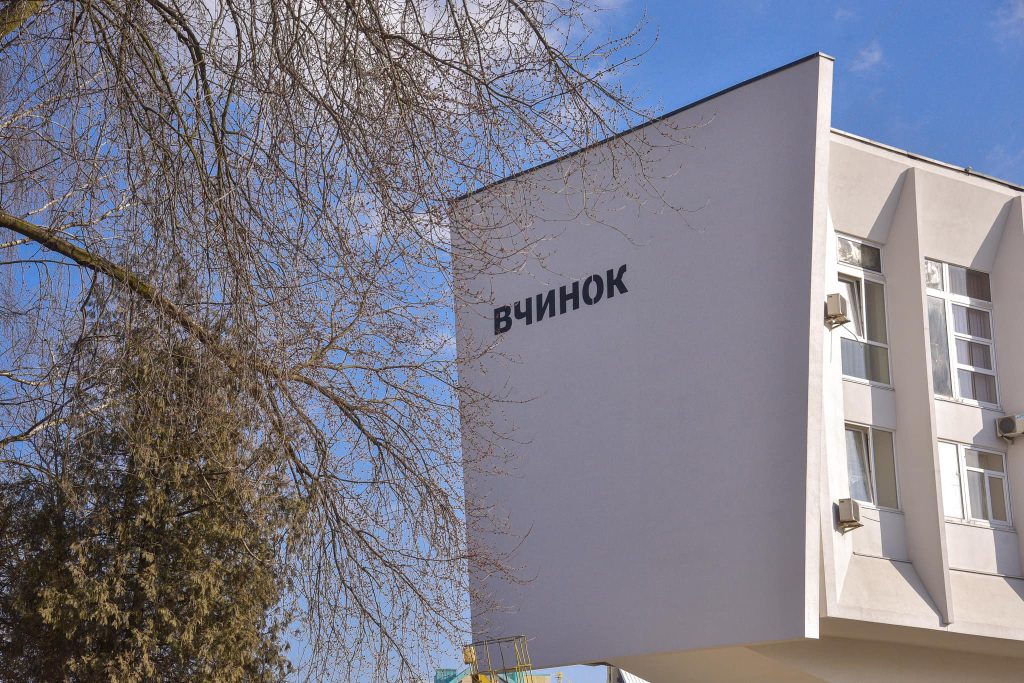
On February 18, an inscription by renowned Brno-based artist Timo appeared on the Stryiskyi bus station building in Lviv. The author depicted the word “action” (vchynok in Ukrainian) against a white background on the end wall facing Stryiska Street. This symbolises the courage and resilience of Ukrainians in times of war.
The project was dedicated to the third anniversary of Russia’s full-scale invasion of Ukraine and represented a continuation of the cooperation between Ukraine and the Czech Republic in the cultural sphere. The idea is that even the smallest action can change the world around us. The bus station was chosen as a place that has gained special significance after the full-scale invasion.
By Vitaliy Hrabar.
By Klára Hlavatá.
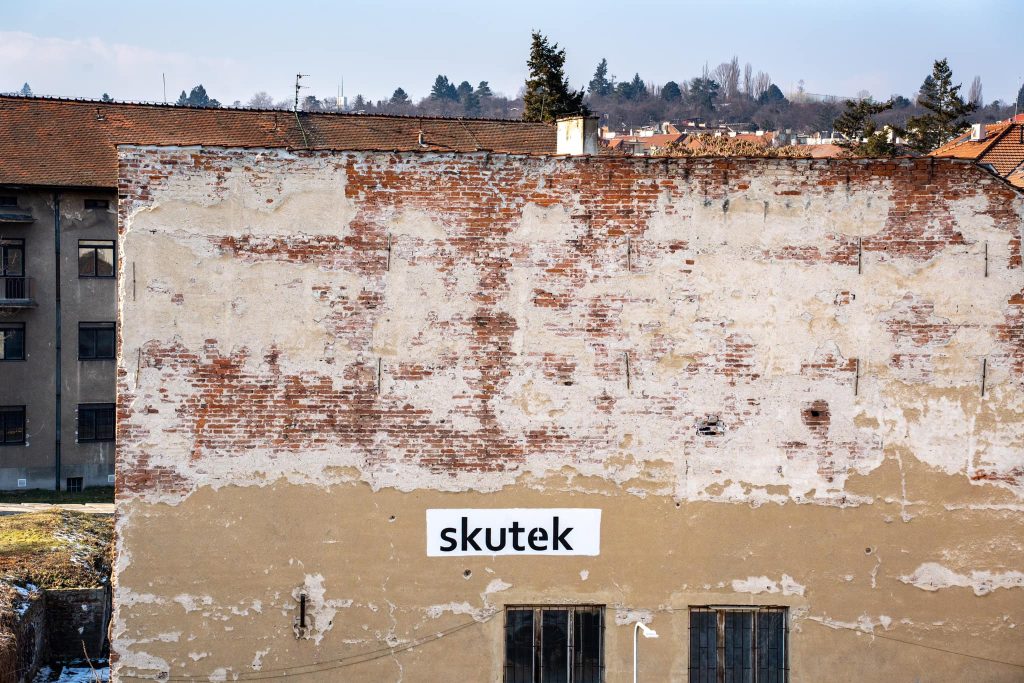
Subsequently, the word “action” in the Czech language — “skutek” — also appeared in Brno. Timo painted the inscription on one of the few remaining walls of the former Borromeo Monastery in the Udolní Street. The building was destroyed at the end of the Second World War. Eighty-one years later, the consequences of the bombing are still visible, reminding us of the long process of healing the “wounds” of war.
The project was implemented as part of a bilateral cooperation agreement between Lviv and Brno. It was supported by the city of Brno, the South Moravian Region, the Partnership Fund, and the Větrné mlýny publishing house. CSI is a partner representing the city of Lviv.
“Filling” — for the third time
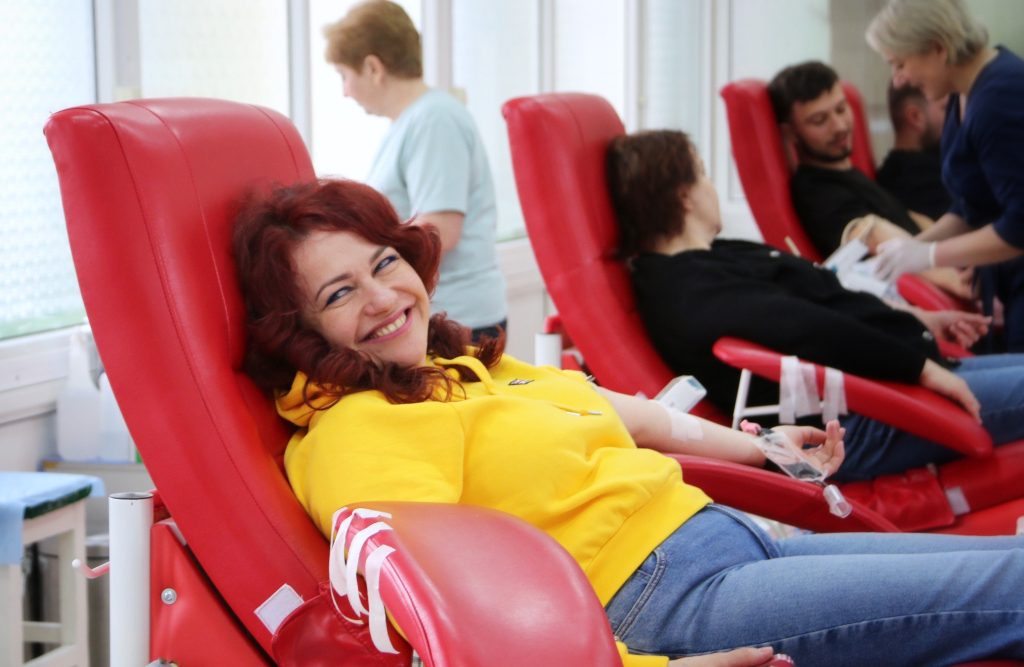
In 2025, the “Filling” campaign took place for the third time. The slogan, “Donate blood — fill yourself with culture,” reminds us of the campaign’s two main goals: encouraging blood donation and supporting the culture of blood donation, as well as promoting cultural institutions, projects, and activities.
As part of the initiative, donors at the Lviv Regional Blood Service Center and the City Blood Center were offered the opportunity to choose and attend a cultural event, such as an exhibition, concert, or performance. More than 40 cultural institutions in Lviv and the Lviv region provided tickets and invitations. During the campaign, which ran from April 10 to May 10, a total of 2,500 flyers (invitations, tickets) offering access to theaters, galleries, art centers, music halls, and museums were distributed to blood donors.
By Mariia Masiuk.
This year, the initiative had its ambassadors! They are veterans and servicemen: Andriy Zholob, Vasyl Halamay, Valentyn Serhiychuk, and Taras Tseliukh, of blessed memory.
The CSI organized this blood donation marathon in cooperation with the Lviv City Council, the Lviv Regional Military Administration, the Lviv Regional Blood Service Center and its Board of Trustees, the City Blood Center (First Medical Union of Lviv), and cultural institutions in the city and region.
Living Library: How civilians and veterans can communicate
The CSI was a partner in the MuMeet project (Culture section), which is being implemented by the City Museum. CSI representatives joined the project, focusing particularly on proper communication between people with and without military experience.
On March 1, the City Museum hosted a Living Library session with Russian-Ukrainian war veterans who served as “living books.” The “readers” were managers and organizers of cultural events, as well as employees of theaters, museums, and art centers. Iryna Shutka, the CSI communications manager, was among them. The six participants of the Living Library — Andriy Pentsak, Yuriy Kozlovskyi, Illia Dmytryshyn, Iryna Vasechko, Andriy Belenets, and Stanislav Dekhtyar — discussed with the attendees how to communicate with veterans sincerely and respectfully without using clichés. They also discussed inclusion, life with disabilities, art as therapy, barriers, and ways of achieving mutual understanding.
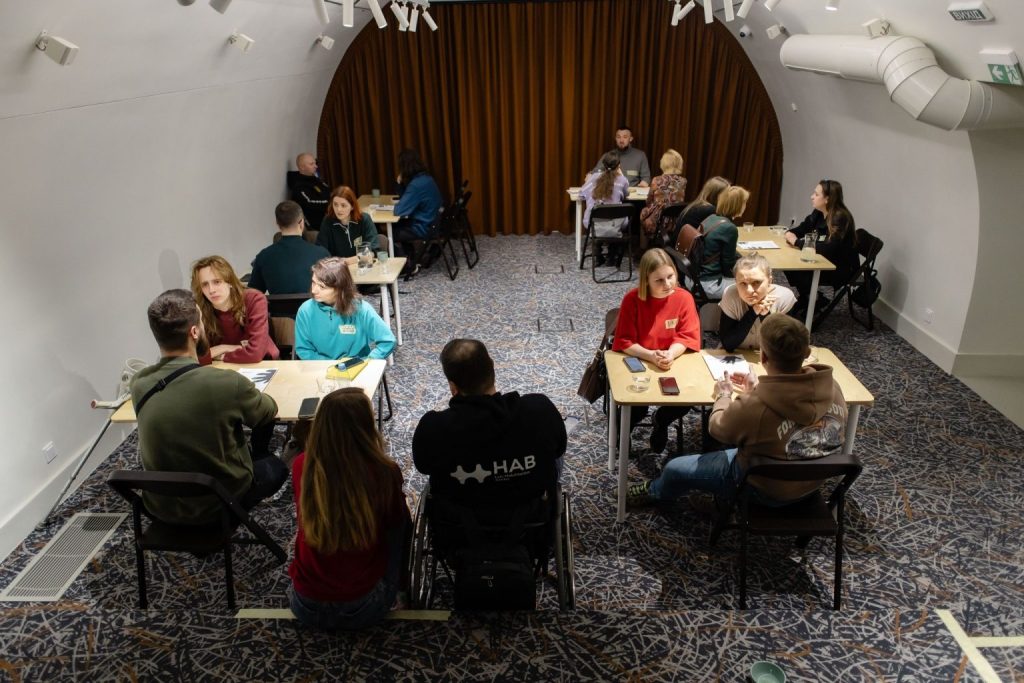
Image source: City Museum’s facebook page.
The meeting led to the creation of a series of videos and a Guide. Searching for algorithms for communicating with military personnel and veterans: How we should—and should not—communicate. All of these materials can be found on the City Museum website. They reveal the cross-cutting priorities of the Lviv Culture Development Strategy 2035: human-centeredness, participation, and barrier-free approach.
The MuMeet project is funded by the “Remembrance, Responsibility, and Future” (EVZ) Foundation as part of its support program, “eMistechko: A Space for Everyone.”
Days of Performance Art: searching for balance
The festival “Days of Performance Art in Lviv. School of Performance” lasted from June 10 to 14. This was the second time it was held in cooperation with the Czech Festival of Naked Forms (FNAF), a platform focusing on the body and its expressiveness.
The festival’s theme was “Adaptation”; it explored life in conditions of war and uncertainty; the search for balance between body and environment, between the lost and the preserved, between pain and hope. Artists from the Czech Republic, Finland, Italy, and Ukraine worked with these experiences. They were Lenka Klodová, Darina Alster, Martin Zet, Kača Olivová, Karolina Raimund, Antonín Brinda, Marie Zandálková, Tomáš Šrama, Lucia Bricco, as well as Andriy Helytovych, Nataliia Lisova, Zirka Savka, Anastasiia Prozora, Nataliia Shevchenko, and Petro Ryaska.
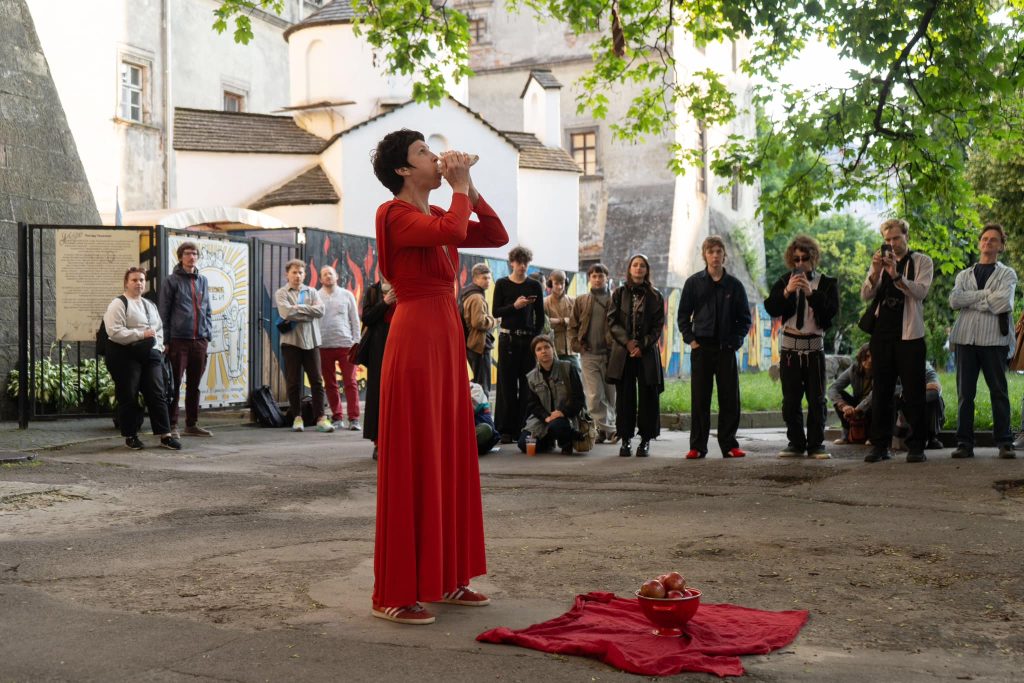
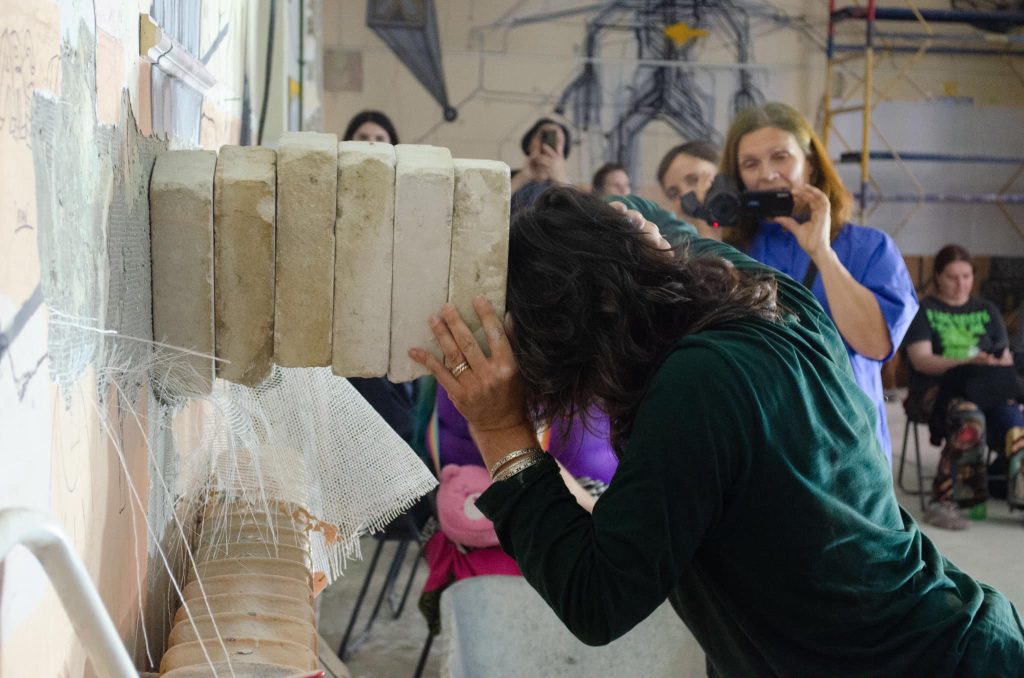
By Roksolana Tabaka.
Performances took place every evening at the Dzyga Art Center and nearby, in the Istoriya space. The performance school brought together two groups of participants in workshops led by Lenka Klodová and Tomáš Šrama. Free to attend were lectures and presentations by festival participants, Lenka Klodová’s exhibition “The Limits of Human Emotions” at the Dzyga Art Center — documented by the artist on her own body as she experienced the news of the full-scale invasion of Ukraine.
Festival curators: Yaryna Shumska, Lenka Klodová, Vlodko Kaufman. Coordinator: Lida Savchenko-Duda.
CSI organized the Days in collaboration with the Department of Contemporary Art Practices at the Lviv National Academy of Arts, the Dzyga Art Center, and the Istoriya space, with support from the Ministry of Culture of the Czech Republic, the Faculty of Fine Arts at Brno University of Technology, the Finnish Cultural Foundation, and the Arts Promotion Center Finland.
10-year Strategy for Culture
The strategy for the development of culture in the Lviv community until 2035 was adopted on July 24, 2025.
This document is the result of research (surveys of residents, interviews with culture professionals, analysis of relevant materials), expert consultation, and a participatory process with representatives of the cultural sector and other spheres in 2024-2025. Worth mentioning are: large strategic session (March 2025), presentation of the results of research on the cultural needs of community residents as part of monitoring the current Strategy (April 17), collection of proposals for the draft of the new Strategy from experts and local residents (May), open presentation of the draft Strategy (May 30), and public hearings regarding the draft document (July 18).
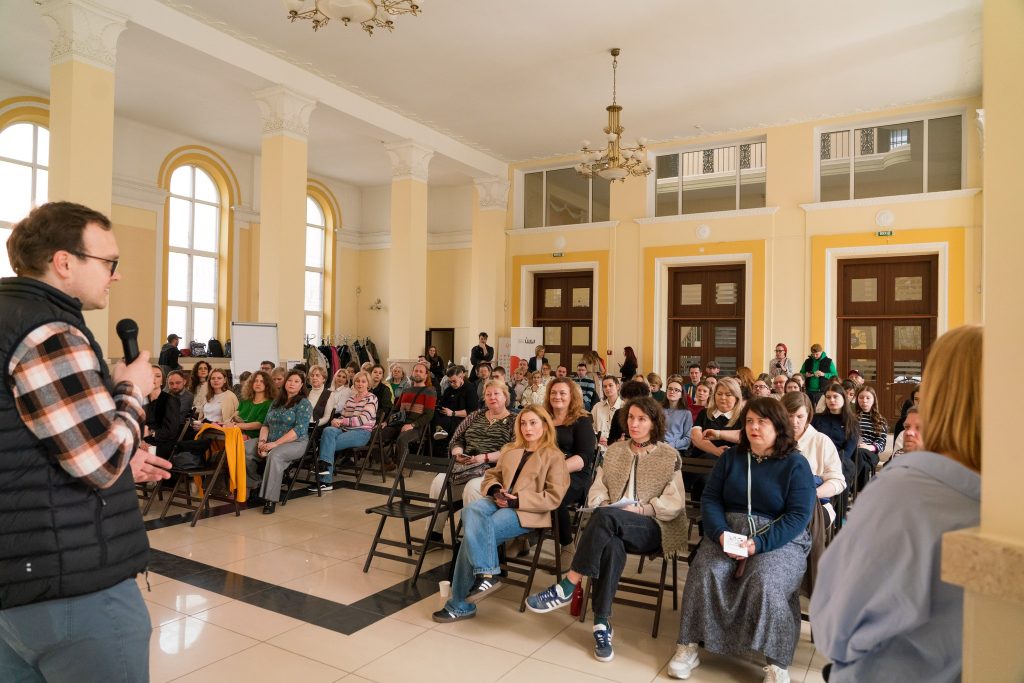
By Vitaliy Hrabar.
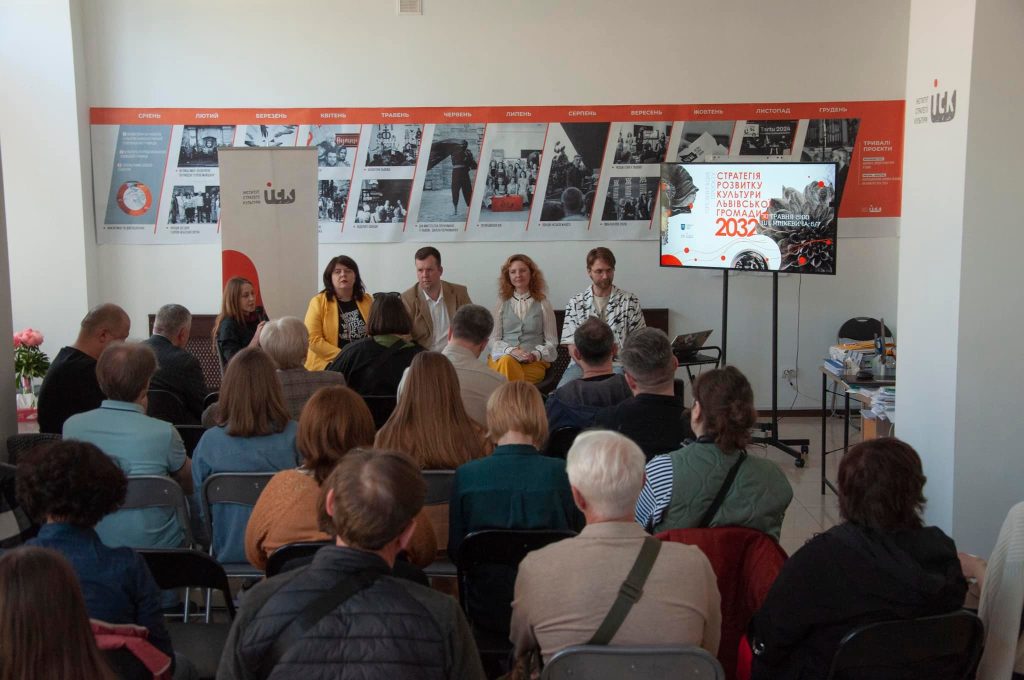
Strategy 2035 sets out a vision for the sector that takes into account the realities of wartime and the important role of culture in these conditions, while continuing the practice of strategic planning at the local level. Its nature is determined by the context of Russia’s full-scale war against Ukraine and the prospect of post-war recovery and reconstruction of the country, by the need to strengthen national security, social stability, and cultural capabilities, by the existence of the Strategy for Cultural Development in Ukraine until 2030, as well as by the European integration process and Lviv’s participation in the international competition ECoC 2030. Meanwhile, 2025 marked the final year of the Lviv Cultural Development Strategyadopted in 2017.
The new Strategy outlines the vision of Lviv as a “European city of living memory, relevant heritage, and new meanings,” and that of its culture — as “a force that creates, develops, and transforms the city,” “is forming a space of responsibility, mutual care, solidarity, and connection with a place for everyone.” The stated mission is “to promote the transformation of Lviv through culture — as a space for knowledge, memory, action, and imagination. To develop culture as a common good that unites the community, heals and restores it, nourishes the city’s identity, and strengthens its resilience.”
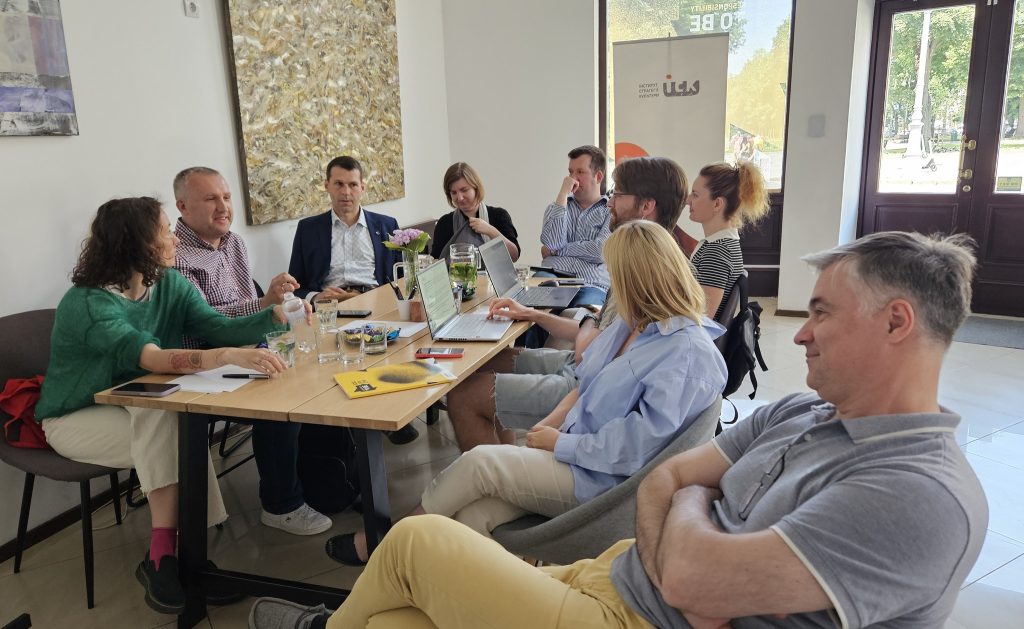
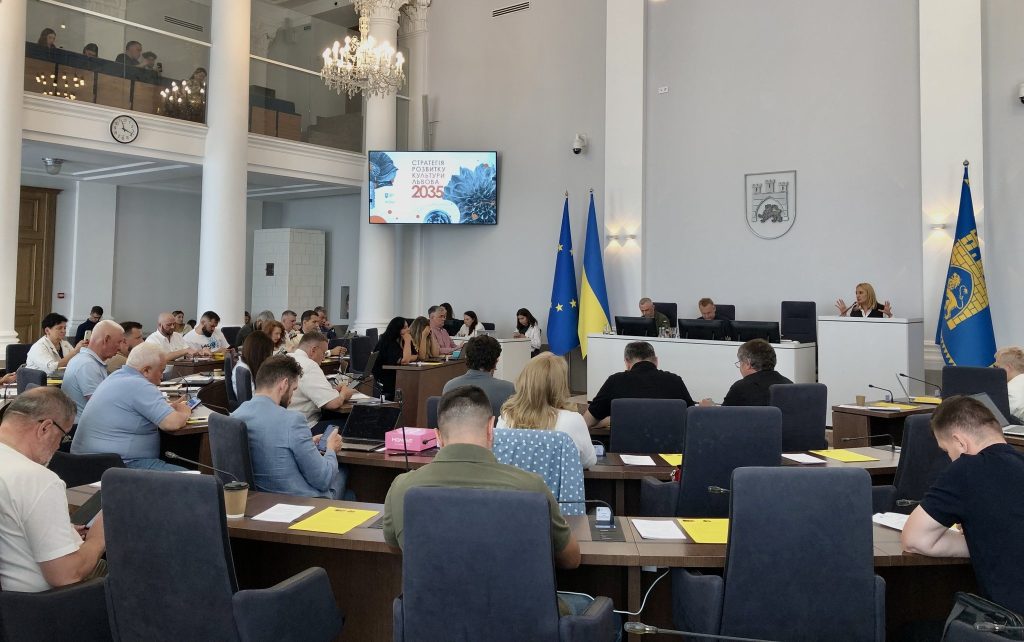
The document emphasizes the priorities of human-centeredness, participation, barrier-free approach, sustainable development, and technological advancement. It defines six strategic areas:
- culture as a factor in national security;
- human capital and education;
- cultural heritage and memory;
- innovation in culture;
- management, financing, infrastructure;
- city cultural diplomacy.
Strategy 2035 is a framework strategy that will be implemented on the principles of flexible management, allowing for a dynamic response to changes. Here is the full text of the Cultural Development Strategy of Lviv Community 2035, and here is a short presentation of the document (in English).
The Strategy was developed by the CSI. The group that worked on the document included Iryna Kulynych, Oleksii Taraban, Antin Borkovskyi, Leila Melesova-Valchak, Andriy Kurochka, Tetiana Balukova, Andriy Pundor, Mariana Kuzemska, and Bohdana Brylynska, with expert advice from Robert Palmer, Olha Sahaidak, and Mykola Skyba.
Labyrinth of Responsibility: a social installation
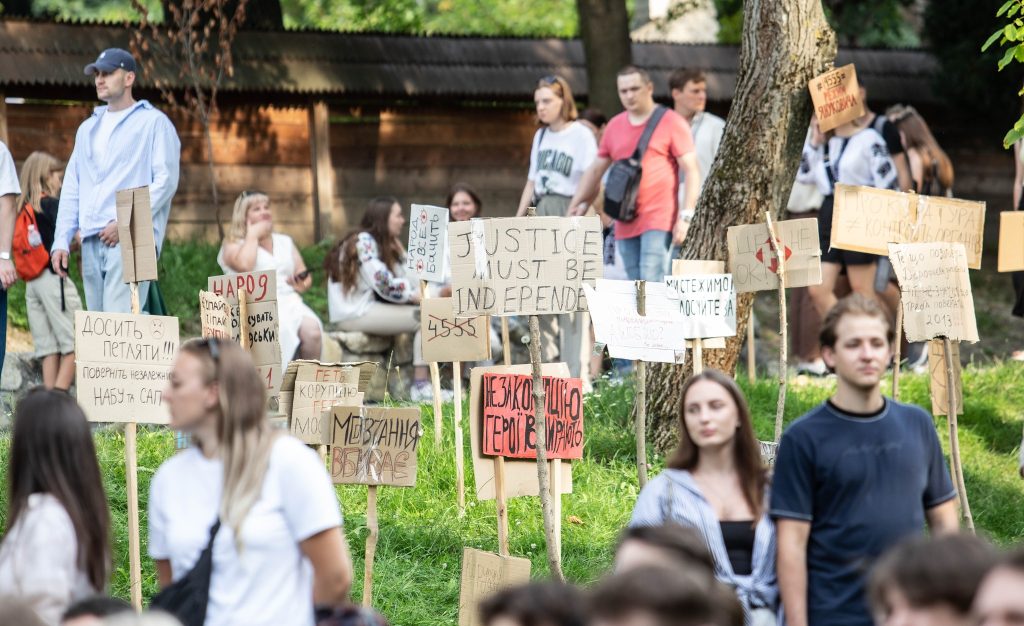
The Labyrinth of Responsibility is a social installation that presented some of the protest posters that appeared in Lviv during July demonstrations in defense of the independence of anti-corruption institutions in Ukraine.
Compared to previous Ukrainian protest experiences, the rallies in the summer of 2025 were somewhat different in form and language (in a broad sense). Globally, they demonstrated that even in the difficult circumstances of war, Ukrainians are aware about ongoing processes in their state and are ready to take responsibility and defend democratic values. The perspective through which we viewed these actions resonates with Lviv’s concept as a candidate city for the title of ECoC — “Responsibility to Be.”
By Tetiana Shtyfurko.
The installation was presented on August 9 as part of the Youth Day in the Shevchenkivskyi Hay. The idea was coordinated by Vlodko Kaufman, artist and curator.
The Student Council of the Ukrainian Catholic University helped the CSI collect the posters.
Independence Lecture by Oksana Zabuzhko
On August 22, the fifth Independence Lecture took place at the Memorial of Heavenly Hundred Heroes in Lviv. The lecture, entitled “Independence — and what next? Culture and security,” was given by Oksana Zabuzhko, writer, literary scholar, and philosopher.
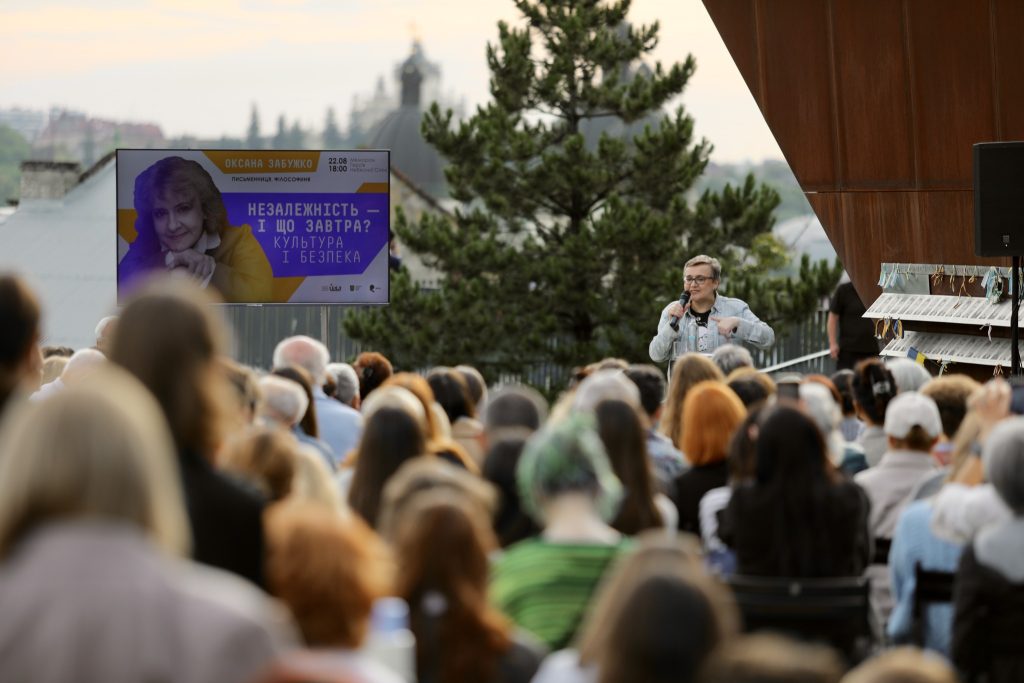
By Iryna Sereda.
The lecturer revisited the questions posed by Yuri Shevelov in his 1979 essay, “Life in Reykjavík, or Independence—and What Tomorrow?” She spoke about the need to think about culture in the context of a “security belt”: culture is a form of security, it preserves identity and helps to form collective responsibility. And a “cultural passport” protects: the world would not accept the destruction of those who have a well-known rich and enduring culture. According to the speaker, the West must realize that here, in Ukraine, Russia is now destroying not only human lives and modern lifestyle, but also a thousand-year-old culture that is an integral part of European and world civilization.
The text of the lecture is available here, and the video recording is below:
During the meeting, donations were also collected for Oleksiy Payanychka, a theater scholar and critic, and his companions-in-arms from the 57th Separate Mechanized Brigade.
The Independence Lecture is a tradition started by the CSI in 2021 and timed to coincide with August 24, the date that marks the restoration of Ukraine’s independence. Together with invited lecturers, we record the moods and values of Ukrainian society, critically review the past, and think about the future.
Traditionally, CSI organized the event in partnership with and with the support of the ЗMIN Foundation and the Lviv City Council.
About Ukraine and the Ukrainian steppe in Brno
From August 20 to 24, the Ukrainian-Czech festival Buď Láska took place in Brno (Czech Republic). A series of diplomatic actions, art events, film screenings and parties, networking, fairs, and charity auctions were held. An important part of the festival was a presentation session held by the CSI for Czech activists regarding the concept and program of Lviv’s bid for the title of ECoC 2030.
Another component was “Povídky o stepi. Sofiia Korotkevych // Stories about the Steppe.” This was an exhibition by Lviv artist Sofia Korotkevych, which took place from August 23 to September 10 at Káznice žije, a historic prison that is currently being transformed into an art center.
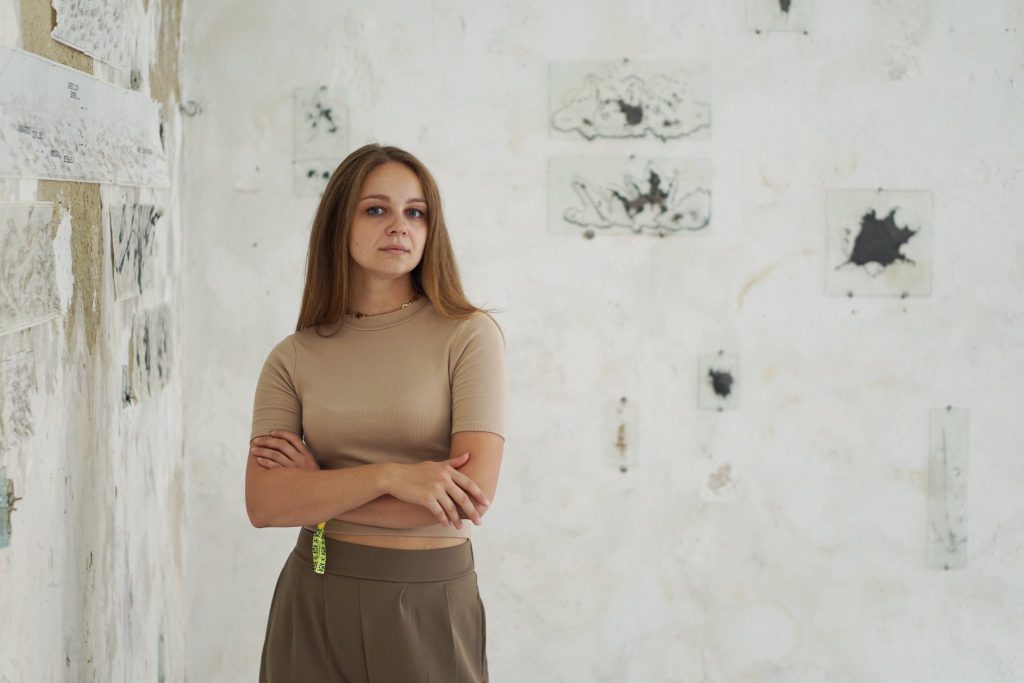
By Majda Slamova.
The author presented a series of graphics, a contact installation, and glass objects. The latter contain plants from the Ukrainian steppe that were burned in a muffle furnace; they were given to the artist by friends who are undergoing military service in southern Ukraine. The literal burning of plants refers to the suffering of natural landscapes due to hostilities.
The art project was supervised by CSI manager Yaryna Korotkevych, who also coordinated the festival on behalf of Lviv.
Partners that organized the Festival: Ukrajinská iniciativa jižní Moravy / Ukrainian Initiative of South Moravia, Koridor UA, and TIC Brno.
“Czech Dreams” continue
The history of Czech support for Ukraine and the development of partnerships and cultural ties between Lviv and Brno continued with the festival “Czech Dreams 2025” (České sny). It took place in Lviv for the second time.
From September 18 to 21, Czech Dreams offered a rich art program. This included a concert by Václav Petr (cello) and David Mareček (piano) at the Lviv Opera House. Dukla, Zapaska, Jan Fic, SAKOBI, Sofia Leshyshak, Neyodovana, Myklukho-Maklai, and Ocheretyanyi Kit performed at Dzyga and in public spaces around the city. There was also an exhibition by Majda Slámová, sound installations by Petr Valek, and more.
An important part of the festival was a conference dedicated to Czech-Ukrainian cultural cooperation. The topics discussed included the preservation of cultural heritage, financing culture, and mental health. During the meeting at the CSI, representatives of teams from Lviv and Brno — David Dietrich, Jana Janulíková, Marek Fischer, Hryhorii Semenchuk, and others — discussed future festivals and cooperation.
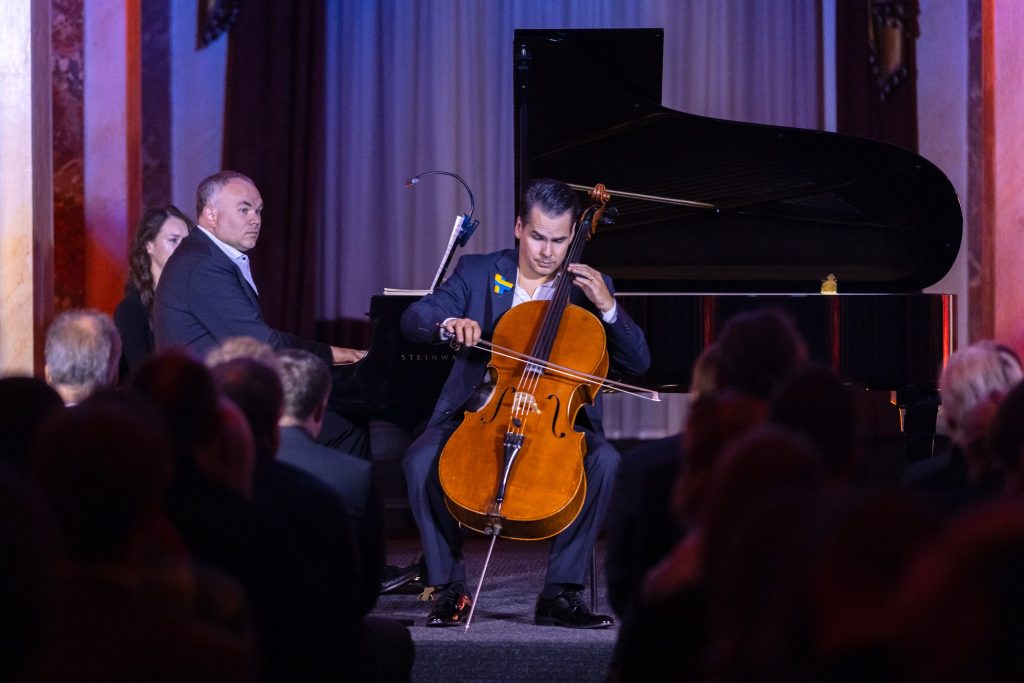
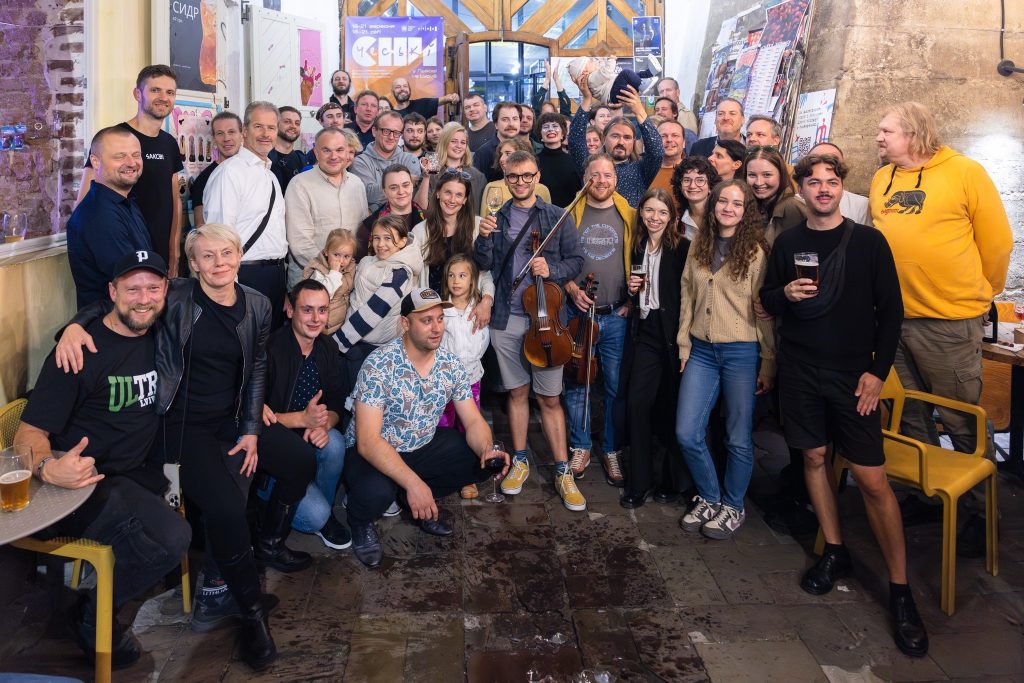
Image source: České sny facebook page.
The event was organized by the Czech Center in Kyiv, the Ministry of Culture of the Czech Republic, the Consulate General of the Czech Republic in Lviv, the Lviv City Council, and cultural institutions of the city under the patronage of Martin Baxa, Minister of Culture of the Czech Republic, Markéta Vanková, Mayor of Brno, Andriy Sadovyi, Mayor of Lviv, Jan Hrolik, Governor of the South Moravian Region, and Maksym Kozytskyi, Head of Lviv Regional Military Administration.
The road to the ECoC status — and beyond
In 2025, Lviv’s journey in the competition for the European Capital of Culture 2030 came to an end. However, this was not the final stop: Lviv will continue to work on the ideas proposed in its competition application, “Responsibility to Be.”
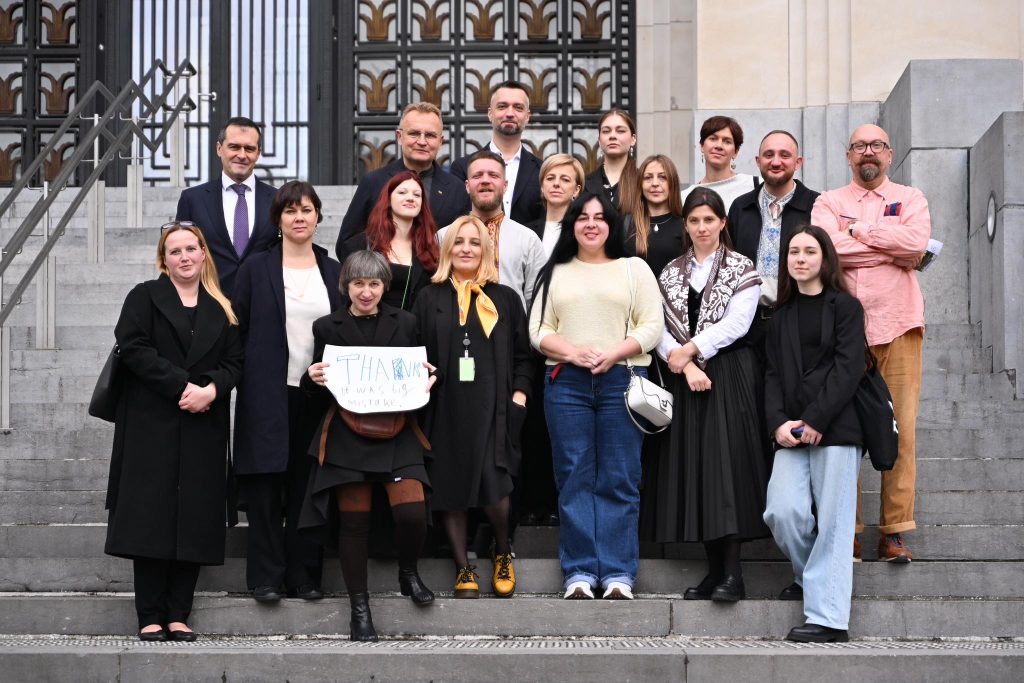
On October 20, in Brussels, the Lviv team defended the city’s application before the competition commission, and the next day the result was announced: Lviv was not awarded the ECoC title. The finale of the competition was the culmination of two years of work on the city’s application, which brought together more than a thousand specialists, primarily in the field of culture, as well as a number of other spheres. At the same time, it is the culmination of a longer story that began in the 2010s, when the idea of applying for the title of ECoC for Lviv was born, if such an opportunity arose. It opened up with Ukraine’s acquisition of candidate status for accession to the European Union (2022). Lviv became the first Ukrainian city to participate in the European Union competition (among cities of candidate countries or potential candidates for EU membership, EFTA/EEA countries). The CSI coordinated the process of developing and submitting the application for the ECoC 2030 competition.
By Anastasiia Smolienko.
Lviv prepared its application for the finale throughout 2025, until its submission in mid-September. It was an intense process: deepening and detailing the ideas proposed in the first round (2024), developing new ones, actively communicating within the city and with partners around the world, writing and designing the application. And on October 13, the competition jury paid a several-hour online visit to Lviv.
Despite the outcome of the competition, Lviv will develop the ideas proposed in the application, since they are important and relevant to the cultural community, the city, the Ukrainian society, and Europe. The concept of “Responsibility to Be” is about the importance of cooperation, the capacity of the community and culture in difficult times, especially during wartime. Culture emerges as a force that bears witness, cares, imagines the future, allows us to remain human despite difficult challenges, and provides support in critical moments. Lviv’s application invited all of Europe to engage in dialogue on these topics and to responsibly co-create the future through culture.
The development of the application during the war is a story of solidarity between different communities around culture and the idea of conscious, responsible living. It is the result of close cooperation between the public sector, state and local authorities, municipal institutions and independent actors, universities, and international actors. It is the development of ties with institutions from over 130 cities on different continents, ECoC cities, Lviv’s twin cities, cultural platforms, and networks. Representatives of Lviv took part in a series of professional meetings, including more than 10 international events (Chemnitz, Molenbeek, Brussels, Brno, Barcelona). We are especially grateful for the professional advice and support provided by Robert Palmer (United Kingdom), an expert in cultural policy and strategy and a member of the CSI Supervisory Board, during the application process.
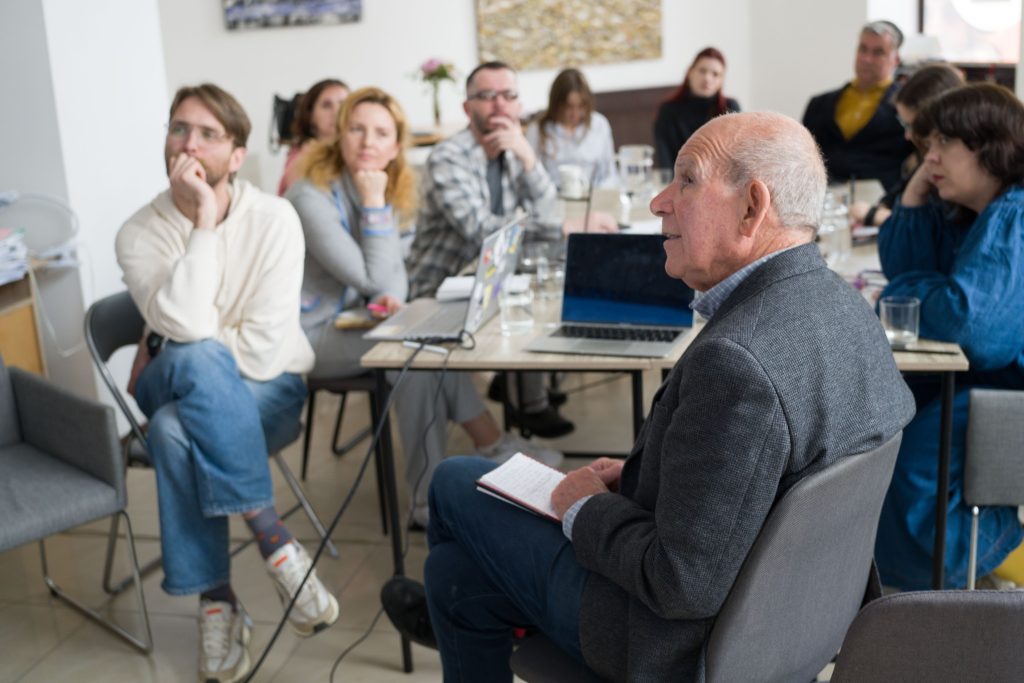
Lviv’s participation in the ECoC competition became the basis for the development of a corresponding city program — on December 18, the Lviv City Council approved the program “Responsibility to Be” for 2025-2030. The program aims to integrate the systematic developments of Lviv’s application for the title of ECoC 2030 into the community’s long-term cultural policy. It is expected to be implemented through a combination of contributions from the city budget, from the government (in particular, the Ukrainian Cultural Foundation), and from fundraising campaigns.
By Roman Baluk.
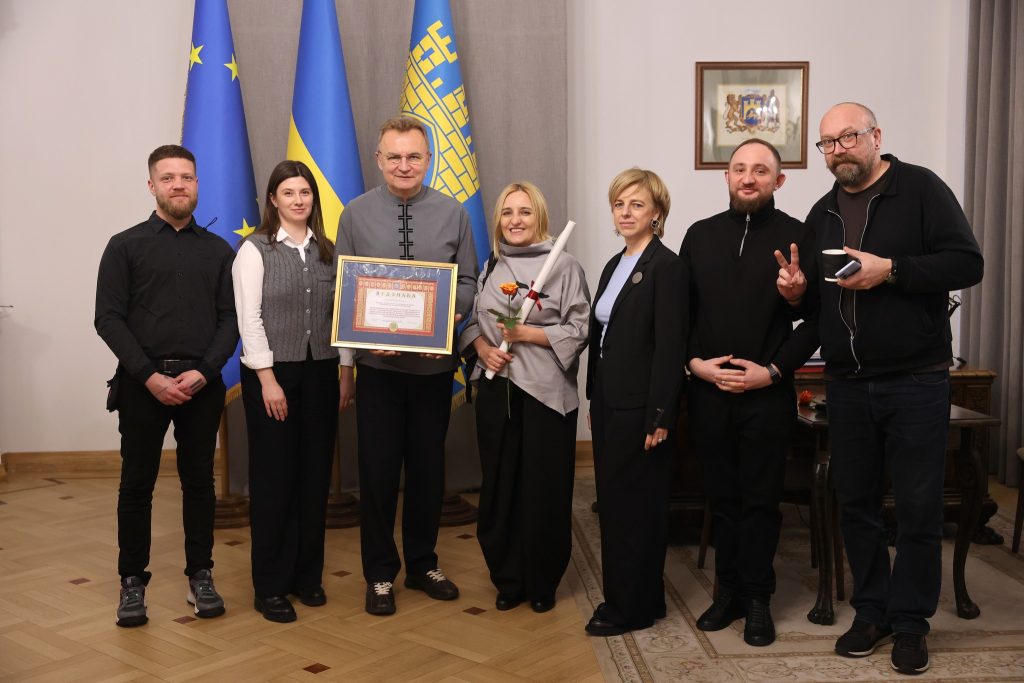
The team of Lviv as a candidate city for the title of ECoC 2030 received a special award in the city competition for people of culture “for a significant contribution to the development of culture, for the development and presentation of the program of Lviv — European Capital of Culture, and for the promotion of Ukrainian culture on the international arena.” The team allocated the monetary component of the award to the preparation and publication of art books in memory of cultural figures who stood up for Ukraine against Russian aggression and whom we lost in this war: “Klyufas.Kobenko” and “Image of a Fish” (in memory of Yevhen Hulevych).
At the same time, the story of “Responsibility to Be” — as an example of uniting representatives of different sectors and partners in Ukraine and abroad around the idea of responsibility and culture — was submitted for the Bohdan Hawrylyshyn Family Foundation’s Responsibility Award.
By Anastasiia Smolienko.
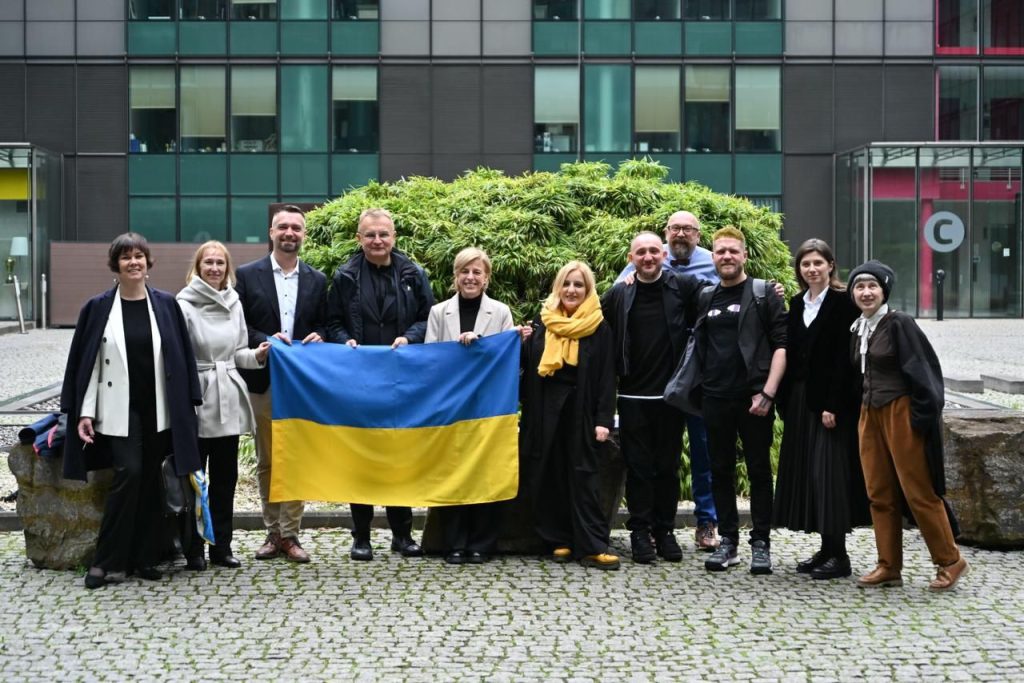
The following people took part in the pitching: Halyna Hryhorenko, Andriy Sadovyi, Volodymyr Sheiko, Yuliia Khomchyn, Yaryna Melnyk, Bohdan Shumylovych, Hryhorii Semenchuk, Volodymyr Behlov, Nataliia Shakhovska, Alevtina Kakhidze, Lida Savchenko-Duda.
The application was made possible thanks to the support of the Ministry of Culture of Ukraine, the Ministry of Foreign Affairs of Ukraine, the Ukrainian Institute, the Ukrainian Cultural Foundation, the Lviv Regional Military (State) Administration, the Lviv City Council, and the International Renaissance Foundation.
Here you can find Lviv’s application and a list of its co-creators, and here you can find more information about Lviv’s participation in the ECoC competition. Follow these links to read the team’s reflections on the competition results and the report of the ECoC 2030 competition commission.
Olena Turyanska nominated for the 2026 Shevchenko Prize
The CSI has nominated Olena Turyanska for the 2026 Taras Shevchenko National Prize of Ukraine with her project “Agape. Absolute Love.” The nomination is in the “Visual Arts” category. The artist is on the list of nominees admitted to the second round based on the results of the first stage, which took place on December 16.
Olena Turyanska’s solo exhibition “Agape. Absolute Love” took place from October 24, 2024, to February 2, 2025, at the Mystetskyi Arsenal. Curators: Oksana Barshynova, Olha Zhuk.
The names of the award winners are traditionally announced on March 9, Taras Shevchenko’s birthday.
Culture Congress “CONNECTION_BREAKUP“
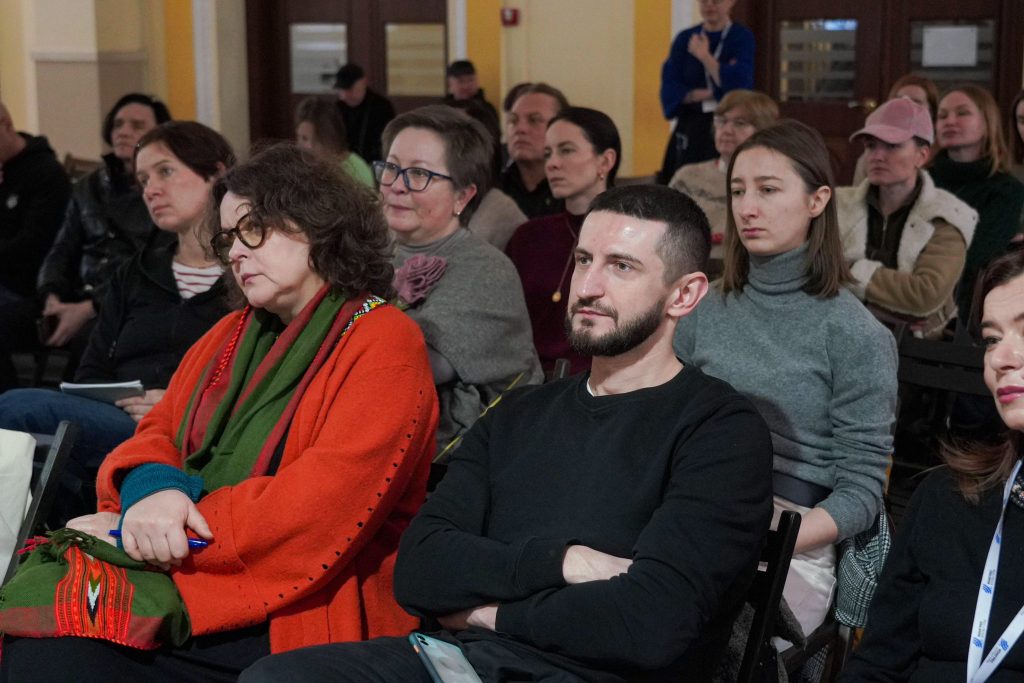
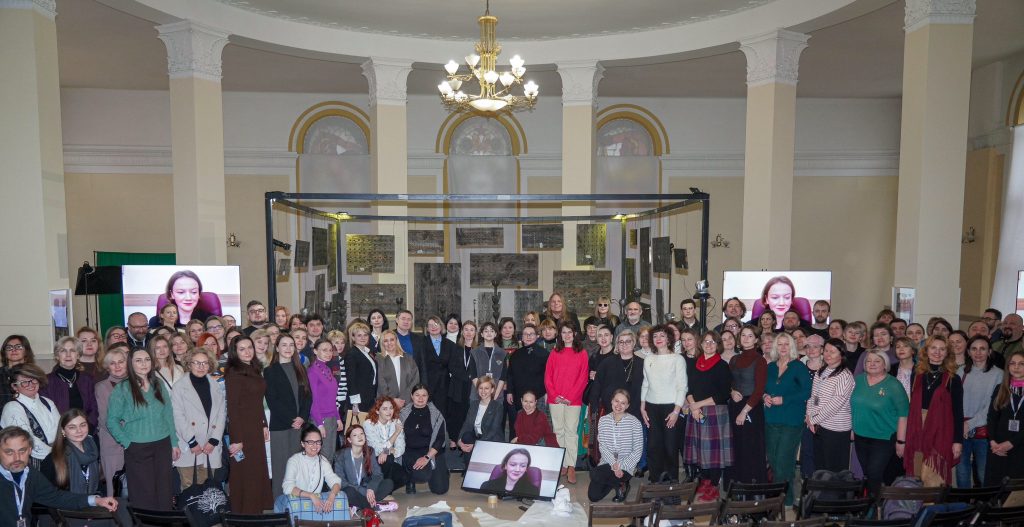
On December 12–14, more than 200 representatives from various cities in Ukraine, including Kyiv, Odesa, Kharkiv, Kherson, Rivne, Uzhhorod, and Vynogradiv, gathered at the IV Culture Congress in Lviv.
Its theme, “CONNECTION_BREAKUP,” was an attempt to explore which connections strengthen our society and which, when broken, free up space for new ones, how to build new connections today, and what is the role of culture in this. The program included discussion, practical, and artistic components.
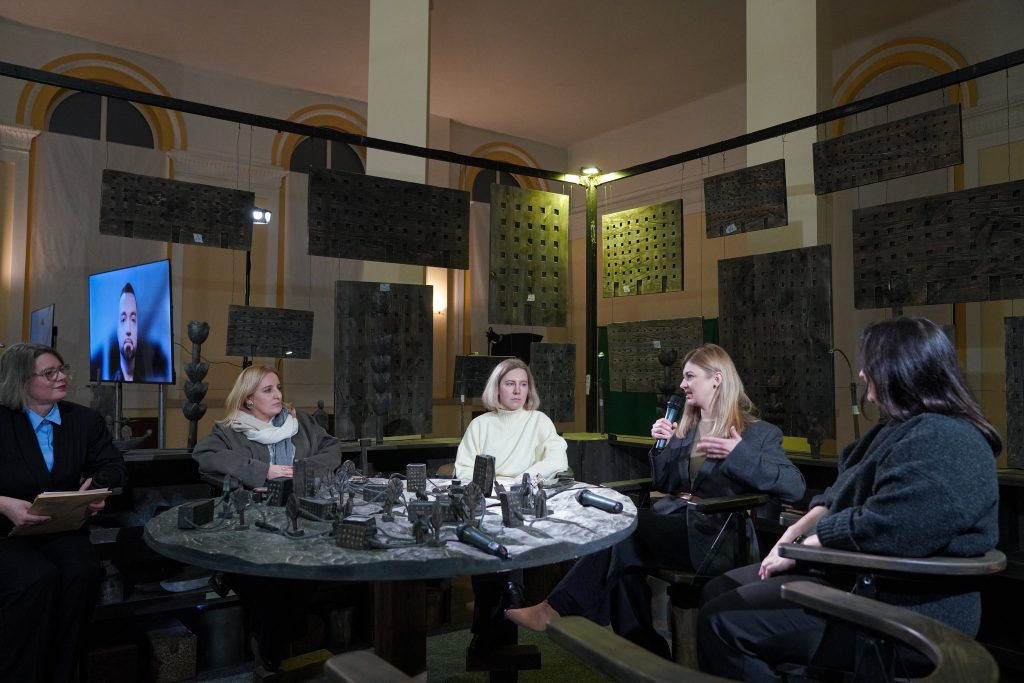
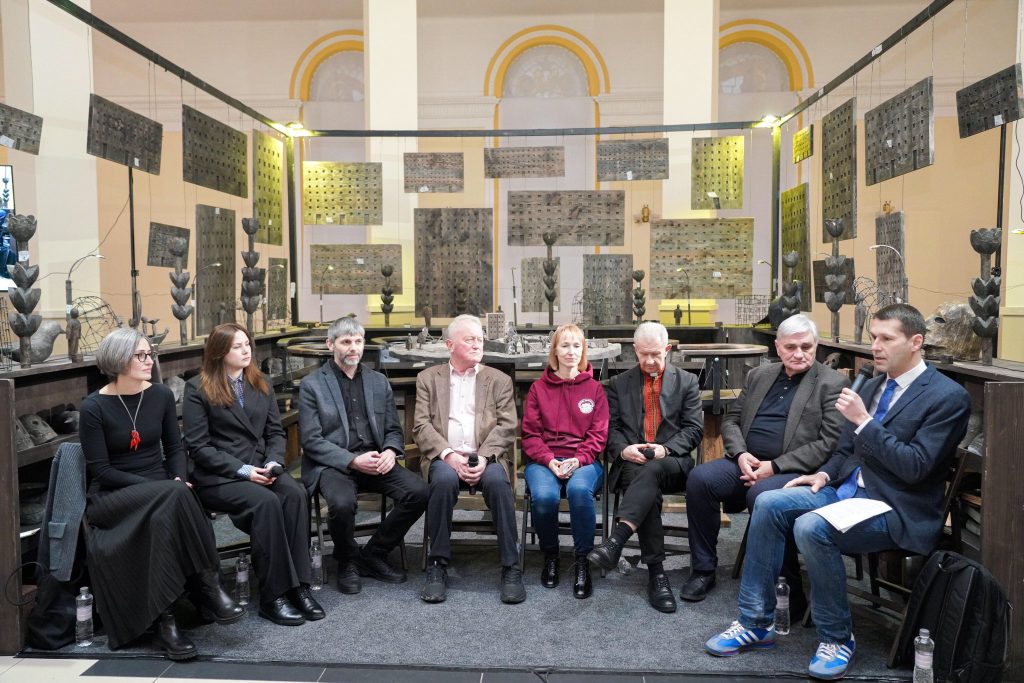
The first day of the Congress began with an inspirational conversation, where Iryna Podolyak, Yurko Prokhasko, and Tetiana Pylypchuk reflected on the theme of connections and breaks, while Vlodko Kaufman transferred this theme into a performative dimension. After the official opening, there were moderated discussions on “Culture in a world without rules,” “Ex nihilo? A conversation with female military personnel,” and “Between us there is a connection_breakup. A new institutional order of culture.” The second day was dedicated to memory, loss, the city, media, shared pain, diaspora — and how connections and breaks work in these contexts. On December 14, the CSI team summed up its 2025 with a discussion entitled “Between universities and culture — today and tomorrow,” attended by rectors and representatives of state and independent universities in Lviv. Video recordings of the discussions are available here.
The professional component of the Congress ran in parallel. On the first day, there was a showcase entitled “Art as a Container of Experiences”: Yurko Vovkohon, Mariana Sadovska, Josephine Burton (online), Veronika Skliarova, and Anastasiia Kosodiy as a moderator, presented projects that work with traumatic experiences, transforming art into a space for recording, experiencing, and talking about pain together. The second day was devoted to practical issues related to education, institutional changes, and state cultural policy. They discussed institutional reform of cultural institutions, the resumption of competitions in cultural institutions, the government’s “1000 Hours of Ukrainian Content” program, the Ukrainian Cultural Heritage Fund, and more. Recordings of the events are available on YouTube.
By Vitaliy Hrabar.
The Lviv-Kharkiv dimension had an important symbolic significance at the Congress as a manifestation of solidarity, regional cooperation, and shared responsibility.
The artistic backdrop was provided by Kharkiv artist Kostyantyn Zorkin’s project “In the Name of the City in Another City.” Actually, the speakers at the Congress held dialogues within the art space. And on the final day, there was a special tour of the project performed by the author:
The vision group that worked on the theme and focus of the Culture 2025 Congress from January to April: Oksana Forostyna, Zoriana Rybchynska, Daryna Skrynnyk-Myska, Ostap Slyvynsky, Hryhorii Semenchuk, Vlodko Kaufman, Yurko Prokhasko, Iryna Podolyak, Iryna Starovoyt, Volodymyr Behlov, Khrystyna Boiko, Yurko Vovkohon, Veronika Skliarova, Lida Savchenko-Duda, Yuliia Khomchyn.
Curatorial group of the Culture Congress: Anastasiia Kosodiy, Veronika Skliarova, Iryna Podolyak, Tetiana Pylypchuk, Viktor Dvornikov, Kostyantyn Zorkin, Volodymyr Kaufman, Oleksiy Khoroshko.
By Vitaliy Hrabar.
The Culture Congress in Lviv is a permanent platform for analyzing current cultural processes and a meeting place for those who create culture.
The Congress was organized by CSI and the NGO “Virmenska 35″ with the support of the Lviv City Council, the 3MIN Foundation, the Renaissance International Foundation, and Ukrposhta. Institutional partners: Literature Museum, Coalition of Cultural Activists, Radio Khartia.
Jazz Bez: 25 years of continuous sound
This year, Jazz Bez celebrated its 25th anniversary! Since 2001, the international cross-border festival of contemporary improvisational music has never been interrupted: neither during the Orange Revolution, nor the Revolution of Dignity, nor during the COVID-19 pandemic, and neither during Russia’s full-scale war against Ukraine.
The 25th anniversary Jazz Bez invited Lviv residents to performances by musicians from Ukraine, the United Kingdom, Germany, Poland, and Cuba on December 12-14.
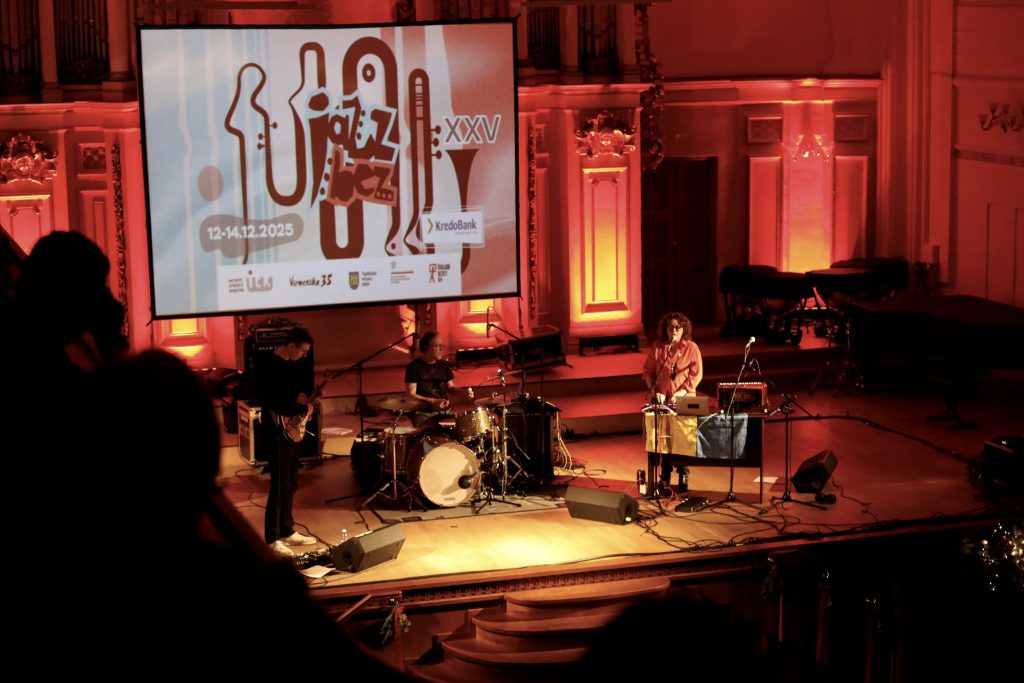
By Iryna Sereda.
On December 13, at the M. Skoryk National Philharmonic, Lviv residents had the opportunity to hear Mariana Sadovska and the VESNA project. Mariana, together with Christian Thome (drums and electronics) and Matthias Kurth (guitar), performed a new program — “You should live!”. The compositions were based on texts by Ukrainian poets.
That same evening, we listened to World Pulse by Roland Abreu (double bass), Luis Nubiola (saxophone), and Widnokres (Maciej Nestor, keyboards, production). It was a meeting of Polish sensuality and Cuban temperament, where music becomes a language of unity between cultures, energies, and rhythms. You can watch and listen to a recording of the concert here:
Jazz harp star Alina Brzezinska, winner of the 2024 UK Parliamentary Award and a native of Lviv, performed on the Jazz Bez stage for the first time. Together with Joel Prime (drums) and Igor Zakus (bass guitar), the musician presented a special program, “In the Footsteps of the Great Masters,” at the ZAG Gallery.
On December 14, the Polish band Ninja Episkopat offered an immersion into a mix of rock, electronic music, and improvisation. Patrycja Wybrańczyk (drums), Krzysztof Hadrych (guitar), and Alex Clov (saxophone, electronics) performed at Dzyga, the place where Jazz Bez began as a Ukrainian-Polish project in 2001.
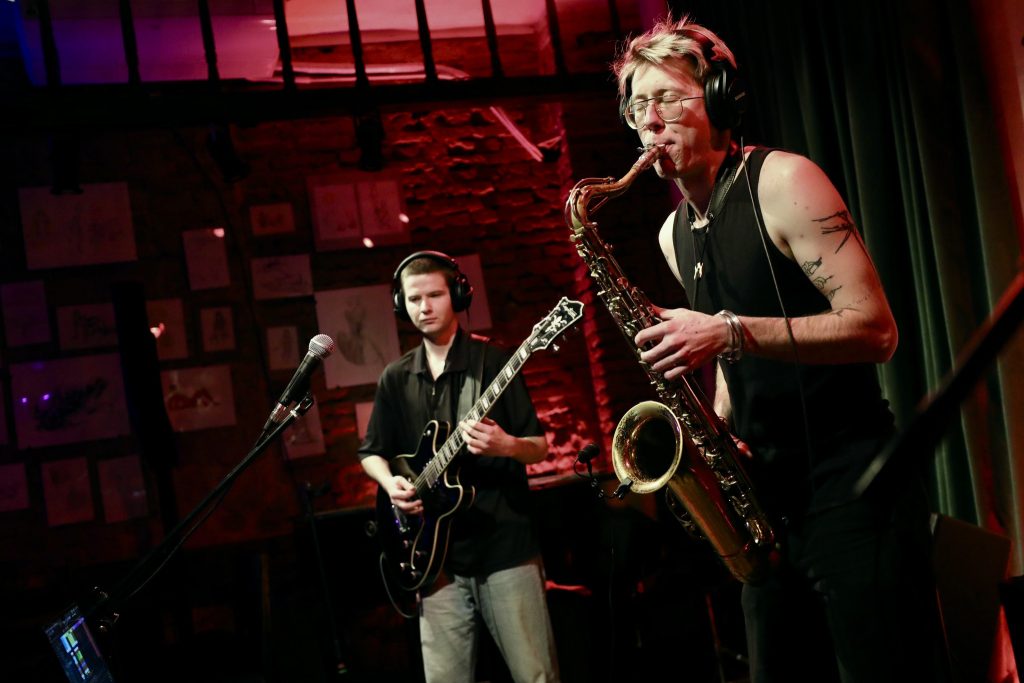
By Iryna Sereda.
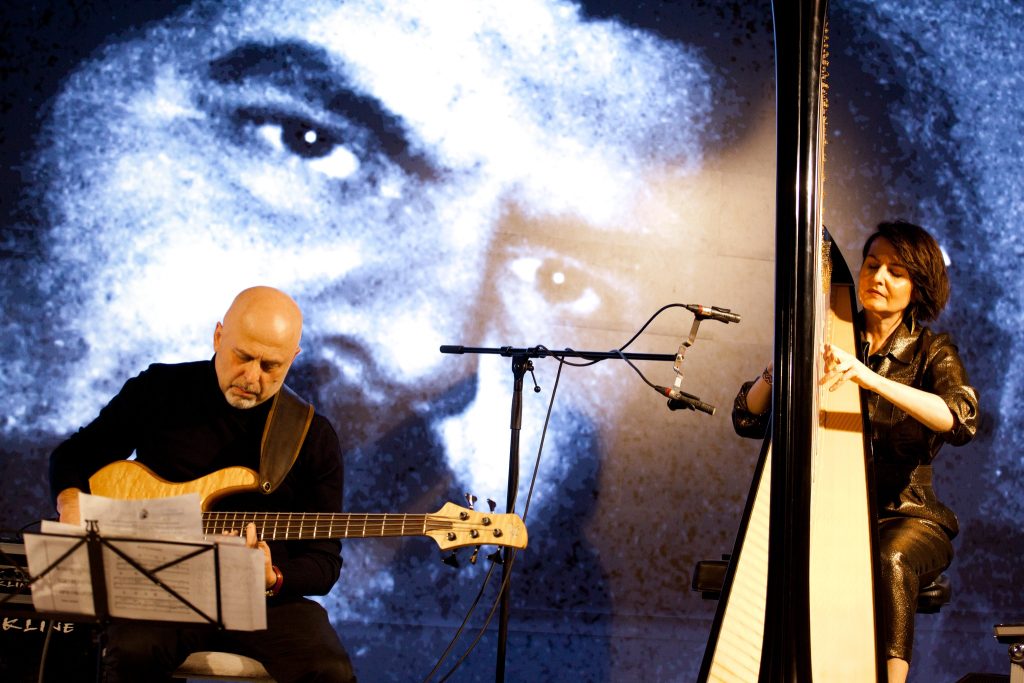
By Polina Pavlova.
Traditionally, Jazz Bez Junior was held as part of the festival — a master class by Alina Brzezinska and Joel Prime for the students of the M. Lysenko Lviv National Music Academy. And once again — this time at the Homin Center — the musical and educational interactive Jazz Bez Kids was organized, together with teachers from the Tempo Music Development Center.
During the festival, a fundraising was performed to support our defenders.
The art director and host of the festival in Lviv was Marta Bilska. The geography of the 25th Jazz Bez: in Ukraine — Lviv, Drohobych, Lutsk, Rivne, Ternopil; in Poland — Przemyśl, Nowica.
The 25th Jazz Bez in Lviv was organized by CSI and the NGO “Virmenska 35″ with the support of the Lviv City Council, the Consulate General of the Republic of Poland in Lviv, and the Polish Institute in Kyiv. The exclusive partner was KredoBank.
Participation in Professional Meetings and Networking
Winter
Workshop “Key Skills for Strategic Partnership with European Cultural Institutions” (January 16-17 / Lviv). What makes an institution a cultural center, what cultural centers live on, what are their roles and functions in modern Ukraine during the war — CSI director Yuliia Khomchyn outlined her vision.
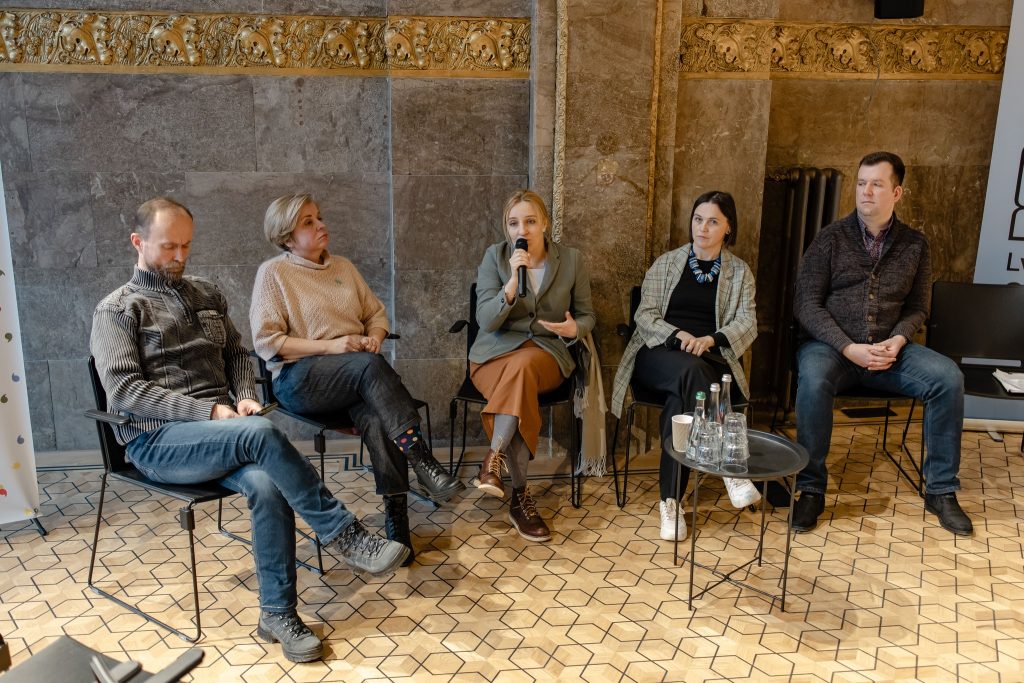
By Bohdan Yemets.
International meeting of cultural managers on the occasion of the 10th anniversary of the UNESCO City of Literature title from Lviv City of Literature (February 2 / Lviv). Yuliia Khomchyn, head of the CSI, also joined the conversation “How Does Cooperation Help in Times of War?”
Spring
Living Library with veterans of the Russian-Ukrainian war — on the search for algorithms for communication with military personnel and veterans (March 1 / Lviv). CSI communication manager Iryna Shutka took part in the Living Library.
Visit of colleagues from the Danish Cultural Institute, Ukrainian-Danish Youth House (Denmark), and the Consulate General of Poland to the CSI (March 14 / Lviv). We were visited by Ida Fuglsang-Damgaard, Julie Arnfred Bojesen, Oleksandra Bulenok, and Bogumiła Rybak-Ziółkowska. We discussed the development of a new Strategy for the Development of Culture in Lviv, the city’s application for the title of ECoC 2030, and preparations for the IV Congress of Culture. The meeting took place as part of a visit to Lviv by representatives of the EU National Institutes for Culture network, organised by UNESCO and the Lviv Cultural Hub.
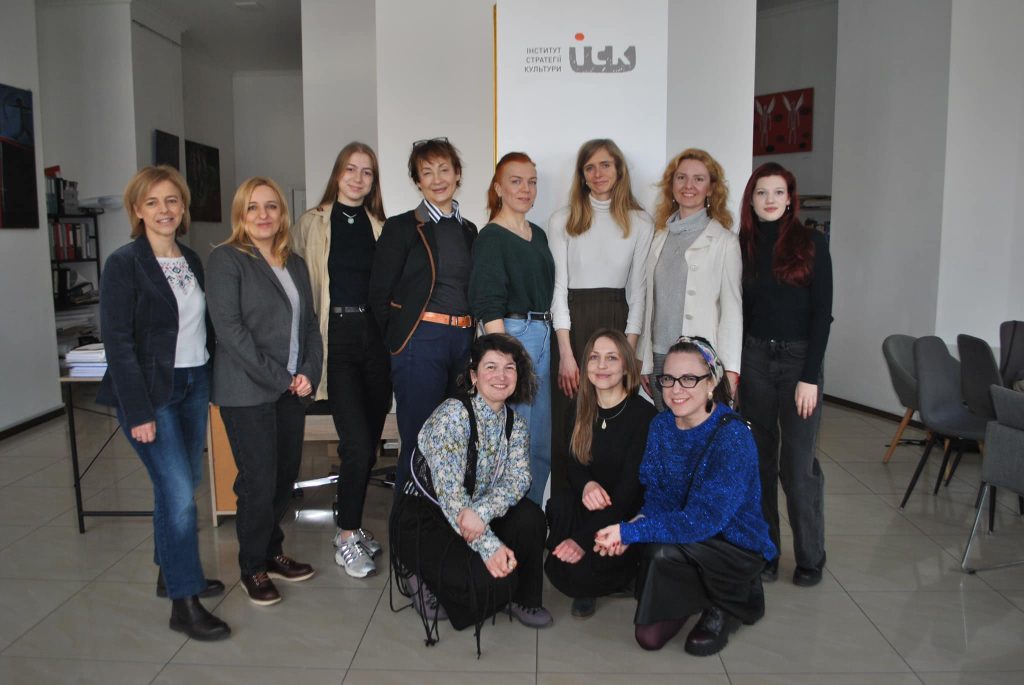
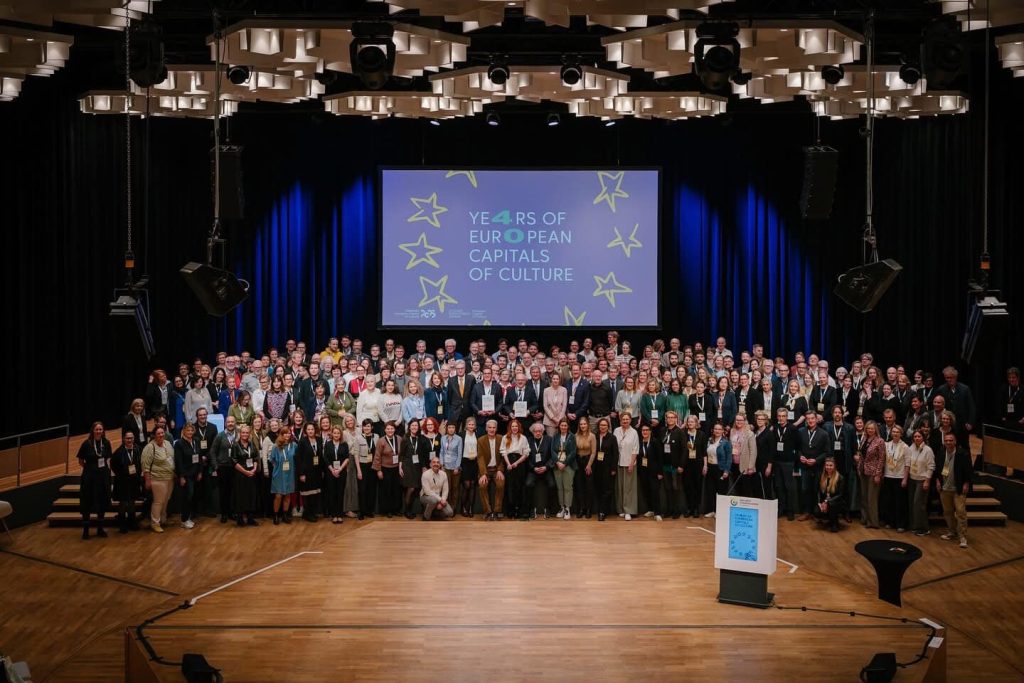
Image source: Chemnitz 2025 facebook page.
Conference “40 Years of European Capitals of Culture” and meeting of candidate cities for 2030 (April 3-4 / Chemnitz, Germany). Lviv as a candidate city for the title of ECoC 2030 was represented by Yaryna Melnyk, manager of Lviv’s application for ECoC 2030, Yuliia Khomchyn, leader of the application and head of the CSI, and Olha Kotska, coordinator of international cooperation within the framework of Lviv’s application process.
International workshop “Spring Atelier” for cities with the title of ECoC and those applying for it (April 24-25 / Molenbeek, Belgium). Lviv’s experience in the field of cultural development in wartime, the development and value of Lviv’s “Responsibility to Be” concept in the ECoC 2030 competition was outlined by CSI director Yuliia Khomchyn.
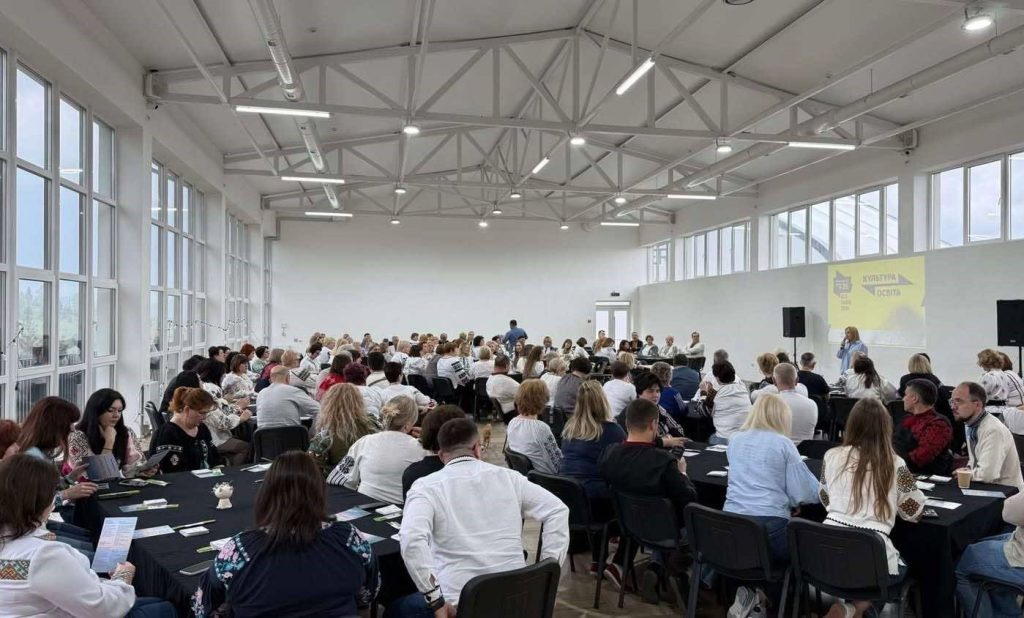
Program for representatives of Lviv’s educational sector (May 15-16 / Yablunytsia). Yuliia Khomchyn, director of the CSI, and Lida Savchenko-Duda, deputy directof of the Institute, took part in a session devoted to the connection between culture and education in the context of Lviv’s application for the title of ECoC. The concept of Lviv in the ECoC 2030 competition was presented to the city’s school principals, and then the meeting participants developed ideas for the city’s application.
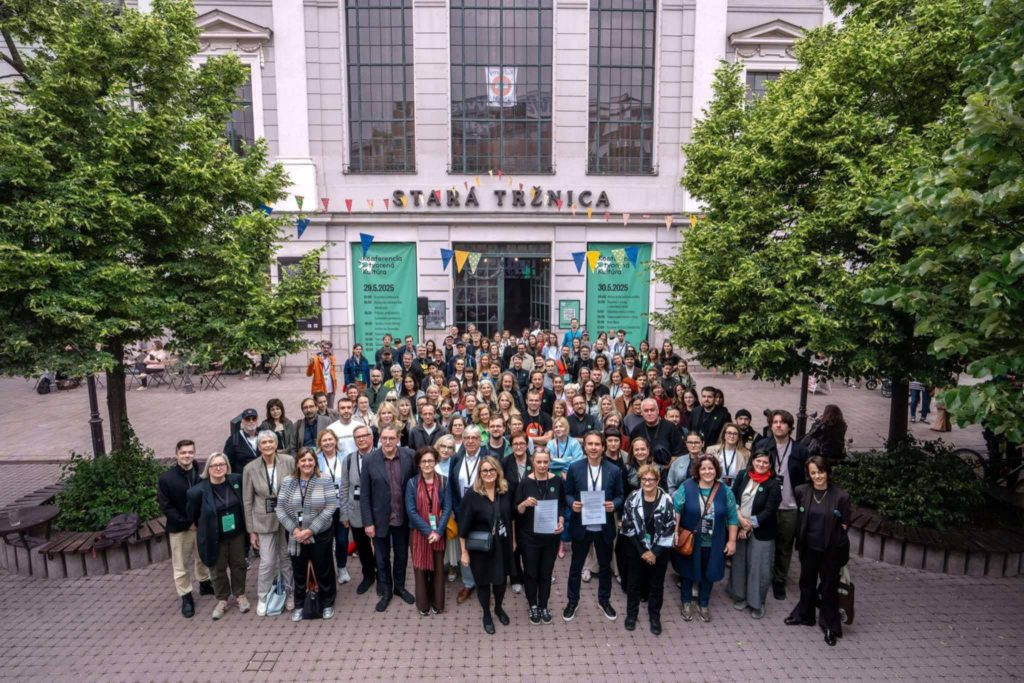
By Šimon Lupták.
Open Culture! International conference / Otvorená Kultúra (May 29-30 / Bratislava, Slovakia). During the panel discussion “Free Cities and Culture,” CSI Director Yuliia Khomchyn explained how Ukrainian culture has changed in the context of the full-scale war.
Summer
Discussion around the Strategy for the Cultural Development in Ukraine in 2025–2030, as well as around the project for a comprehensive reform of the network of cultural institutions (June 30 / Lviv). The CSI was a partner of this event on behalf of the RES-POL project, and CSI analyst Vasyl Tkachuk and CSI project manager Anastasiia Nechyporenko participated in it.
Invest Summit. Jazz Business, a meeting of international investors, Ukrainian government officials, and representatives of large, medium, and small businesses (July 4–5 / Lviv). CSI Director Yuliia Khomchyn presented Lviv’s application for the title of ECoC 2030 to the participants.
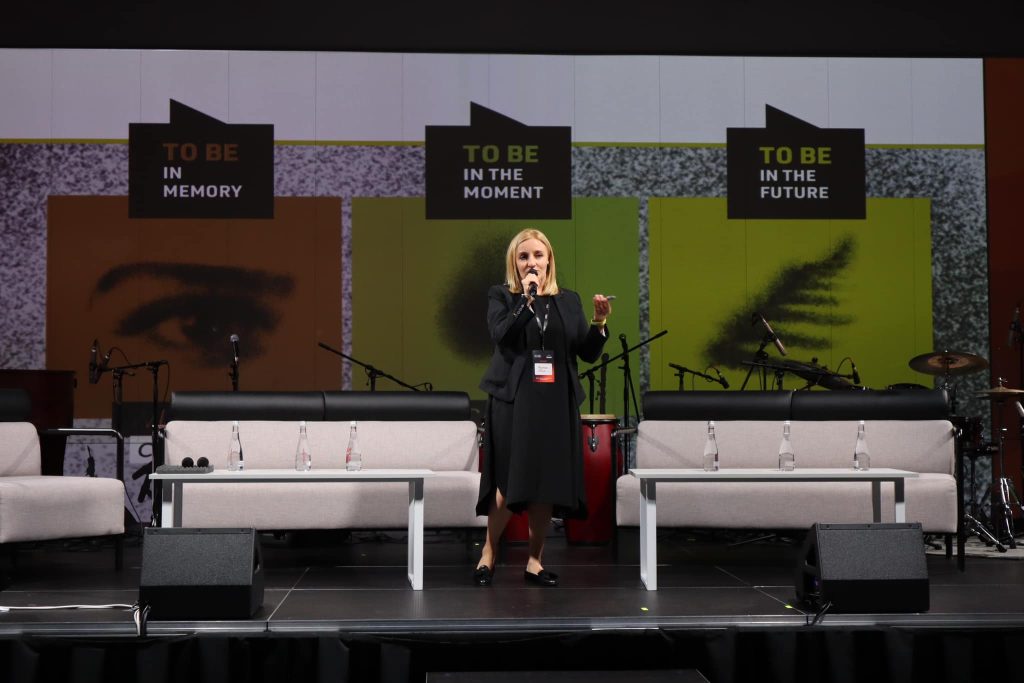
The Conference “AntIDote: Unity” for representatives of culture, the public sector, state institutions, the diaspora, and local initiatives from different parts of Ukraine (June 24-26 / Lviv). At a pitching panel dedicated to projects that can unite communities, CSI Director Yuliia Khomchyn presented Lviv’s application for the title of ECoC 2030 to the audience.
The 14th Culture Next conference, a network of current and former ECoC candidate cities, with the theme “Cultural Participation” (July 8-10 / Leeuwarden, Netherlands). Lviv, as a candidate city for the title of ECoC 2030, was presented by Yuliia Khomchyn, director of the ECoC and leader of the city’s application process.
Healing Arts Lviv (July 20-27 / Lviv). Yuliia Khomchyn, head of the application process and director of the CSI, spoke at the congress about how Lviv’s application for ECoC 2030 deals with the theme of healing through culture.
A conversation with representatives of NGOs at the Lviv Bureau for European Integration about the titles of ECoC and European Youth Capital (August 8 / Lviv). Yuliia Khomchyn, director of the CSI, joined the conversation.
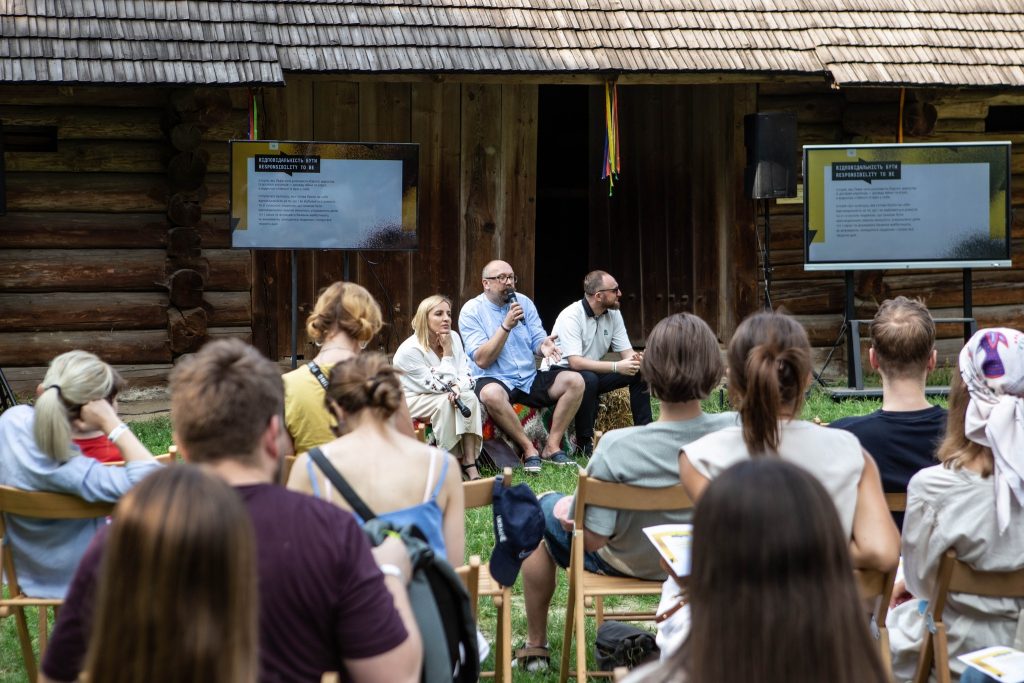
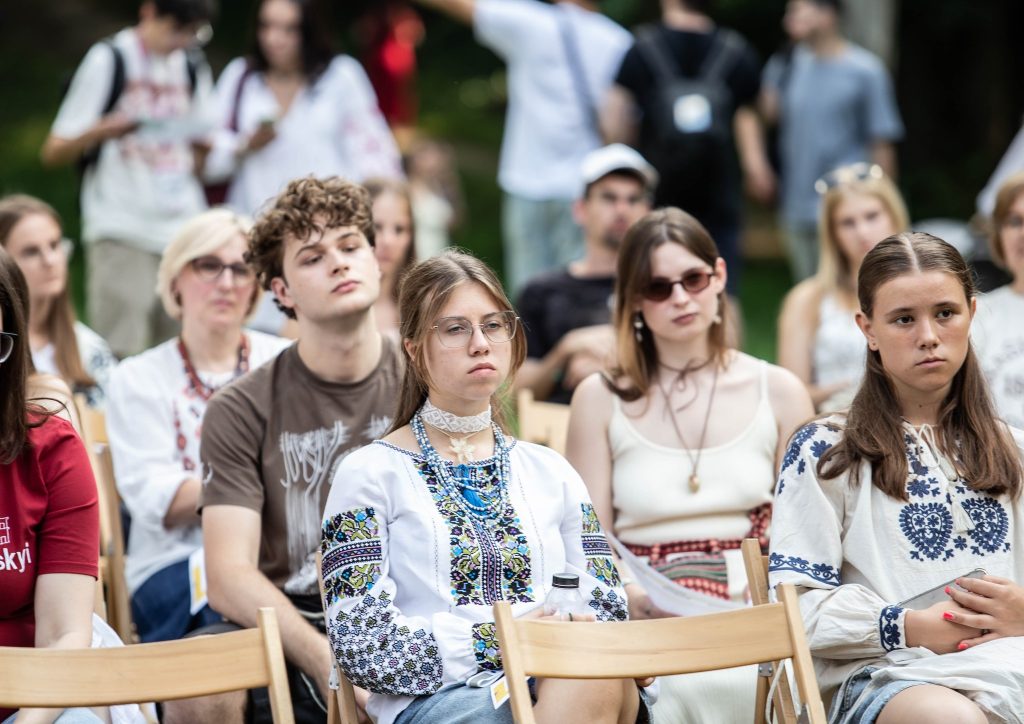
Meeting dedicated to Lviv’s application for the ECoC 2030 competition (August 9 / Lviv). The city’s program for the ECoC title was presented to young people and representatives of the cultural sphere by members of the Lviv team — Yuliia Khomchyn, Bohdan Shumylovych, and Hryhorii Semenchuk.
By Tetiana Shtyfurko.
By Olha Zalizniak.
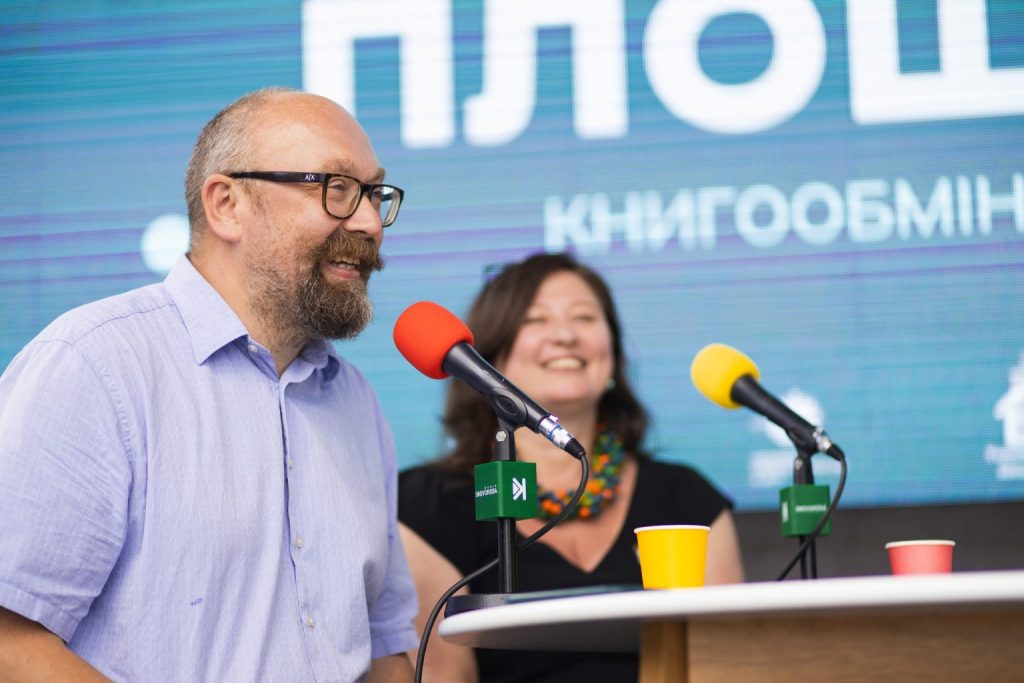
Conversation “Capital of European Culture.” Book exchange “Book Square — 2025” (August 17 / Lviv). The topic was discussed by Bohdan Shumylovych, artistic director of Lviv’s program for the title of ECoC 2030, and Halyna Kruk, poet, literary scholar, translator, and member of the focus group developing Lviv’s concept. You can listen to a recording of the conversation here.
Meeting with representatives of Lviv’s municipal cultural institutions to discuss the city’s final application for the ECoC 2030 competition (August 18 / Lviv). The discussion was led by Yuliia Khomchyn, head of the application process, and Lida Savchenko-Duda, program manager for the application.
Presentation session for Czech activists who cooperate with Ukraine on Lviv’s concept and program for the title of ECoC 2030 as part of the Buď Láska festival (August 20-24 / Brno, Czech Republic). The event was hosted by CSI manager Yaryna Korotkevych.
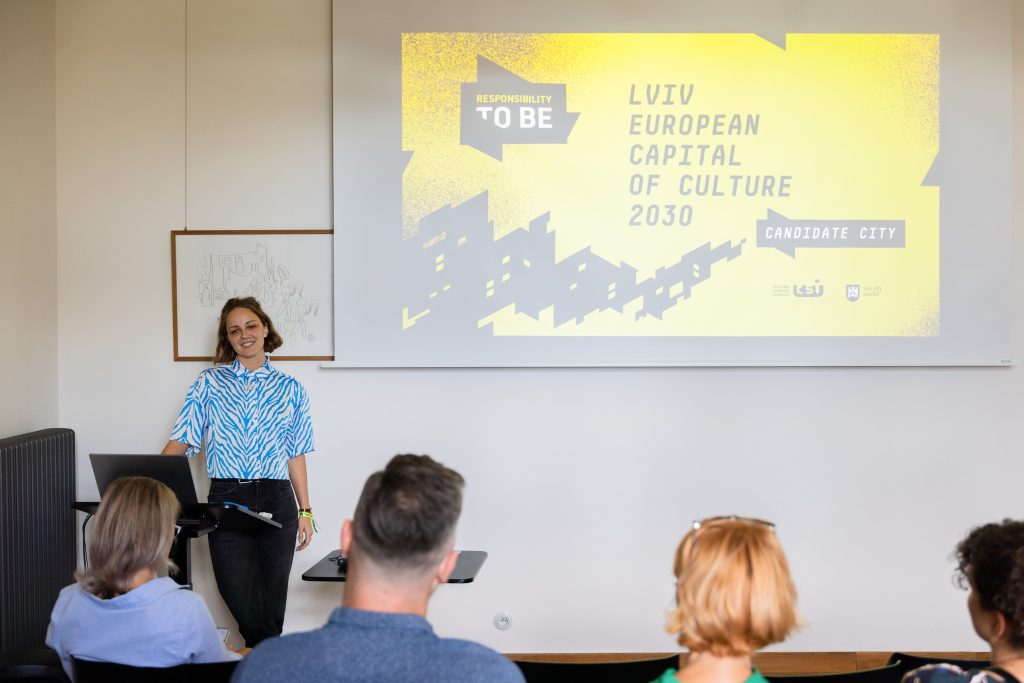
By Majda Slamova.
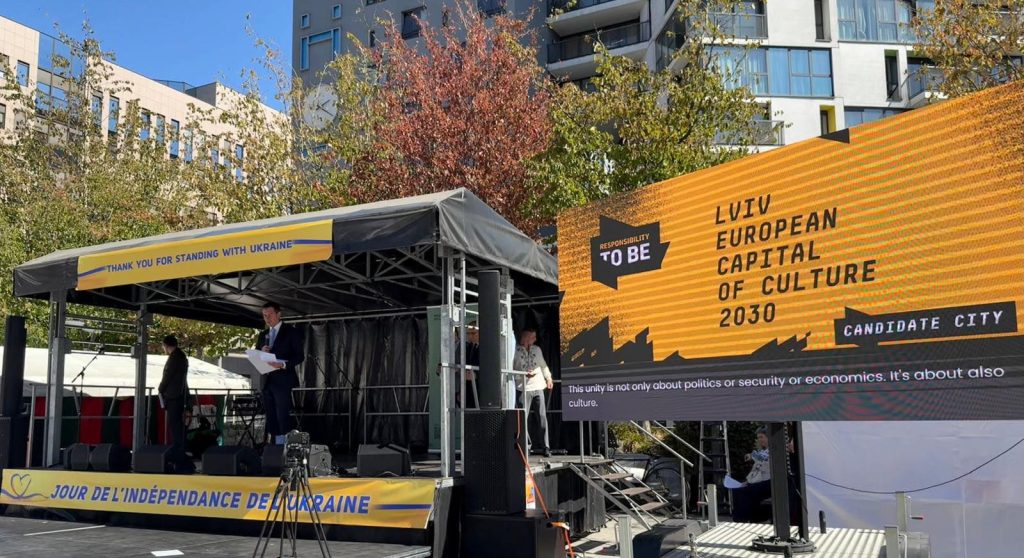
Celebration of Ukraine’s Independence Day in Brussels by the Mission of Ukraine to the European Union (August 24 / Brussels, Belgium). Ukraine’s representative to the EU, Vsevolod Chentsov, shared Lviv’s idea for the ECoC 2030 competition — Responsibility to Be — with a foreign audience.
Autumn
Molodvizh within the framework of the title year of Lviv — the European Youth Capital 2025 (September 6 / Lviv). The presentation of Lviv’s application concept “Responsibility to Be” for the title of European Capital of Culture 2030 took place.
MONDIACULT 2025, UNESCO World Conference on Cultural Policies and Sustainable Development (September 29 — October 1 / Barcelona). Serhiy Kiral, Deputy Mayor of Lviv for International Cooperation, spoke about Ukrainian culture, Lviv Cultural Development Strategy 2035, and Lviv’s application for the ECoC 2030 title.
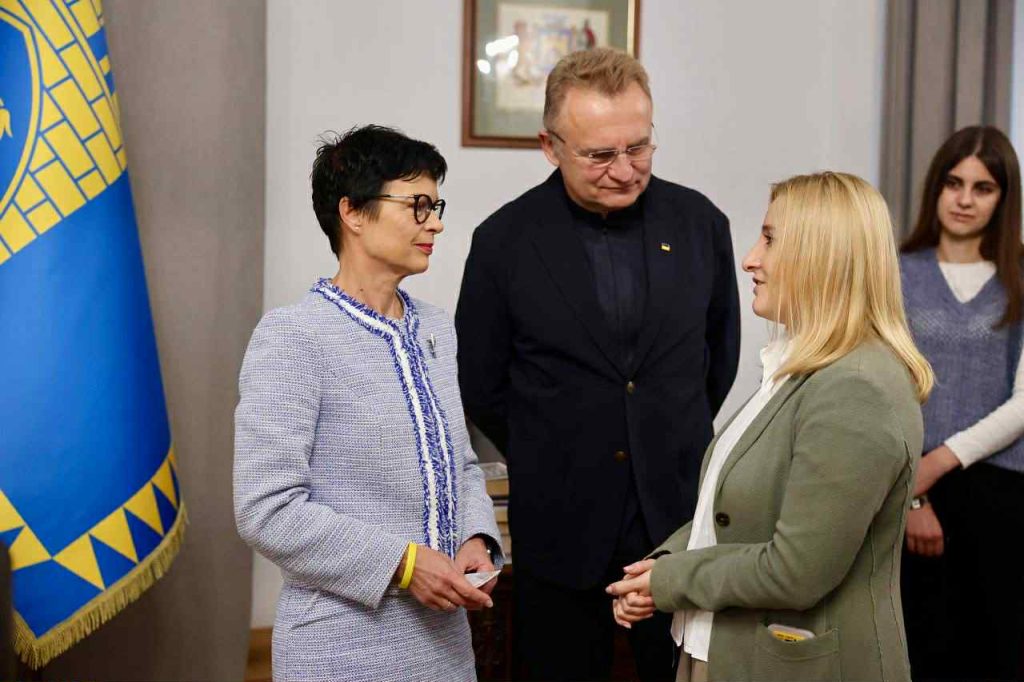
Meeting with Marta Kos, European Commissioner for Enlargement (September 30 / Lviv). Culture in the context of Lviv’s concept “Responsibility to Be” in the ECoC 2030 competition — Yuliia Khomchyn, head of the CSI, discussed this topic with the European Commissioner.
By Roman Baluk.
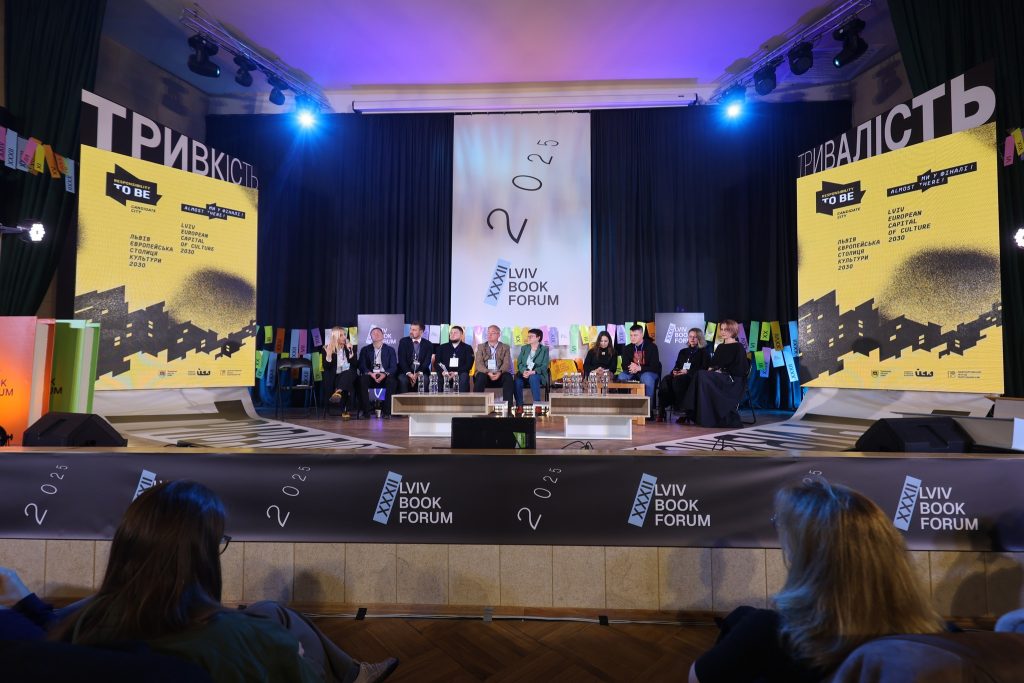
XXXII Book Forum (October 3-5 / Lviv). At the opening of the event, Lviv’s concept of “Responsibility to Be” in the ECoC 2030 competition was presented by Yuliia Khomchyn, director of the CSI. CSI communications manager Iryna Shutka joined the discussion “From Visibility to Influence: Cases of Ukrainian Cultural Diplomacy” organized by the International Renaissance Foundation.
International Cultural Forum “Culture Tomorrow: A Decade for Brno Culture and Creativity” (September 23 / Brno, Czech Republic). Anastasiia Nechyporenko, manager at the CSI, presented Lviv’s experience in strategizing, Lviv Cultural Development Strategy 2035, and Lviv as a candidate city for the title of ECoC 2030.
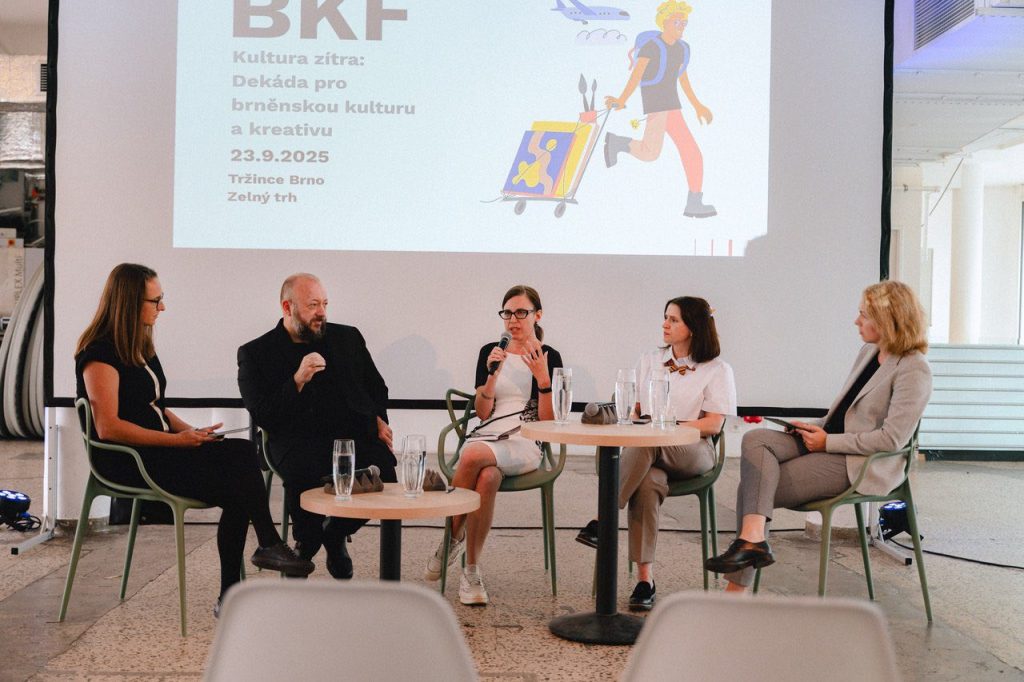
By Dag Markl.
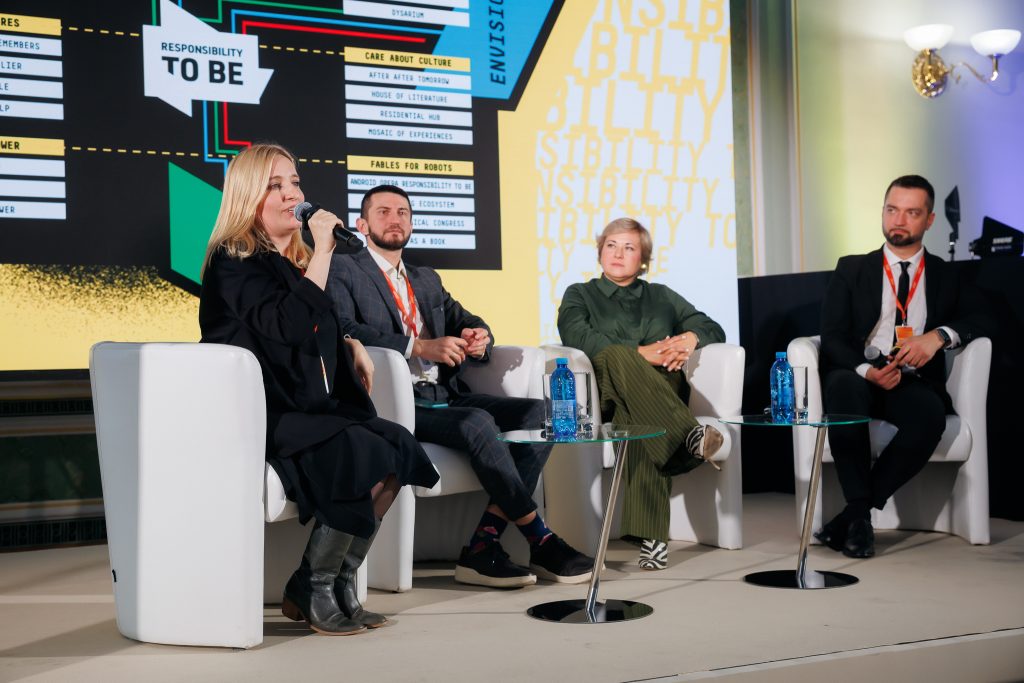
By the Ukrainian Institute.
Sixth International Forum on Cultural Diplomacy (October 6 / Kyiv). Yuliia Khomchyn, director of the CSI, discussed the role of urban cultural diplomacy and Lviv’s participation in the ECoC 2030 competition.
Dysarium, the largest design event of the year in Ukraine, centered on the “Identity” theme (October 11-12 / Lviv). Mayor Andriy Sadovyi spoke about Lviv’s concept in the ECoC 2030 competition, “Responsibility to Be.”
A meeting dedicated to sharing information and discussion concerning Cultural Development Strategy of Lviv Community 2035, as part of a series of training sessions for cultural managers offered by Lviv City Council’s Department of Culture (November 4 / Lviv). CSI analysts Vasyl Tkachuk and Solomiia Tkach participated.
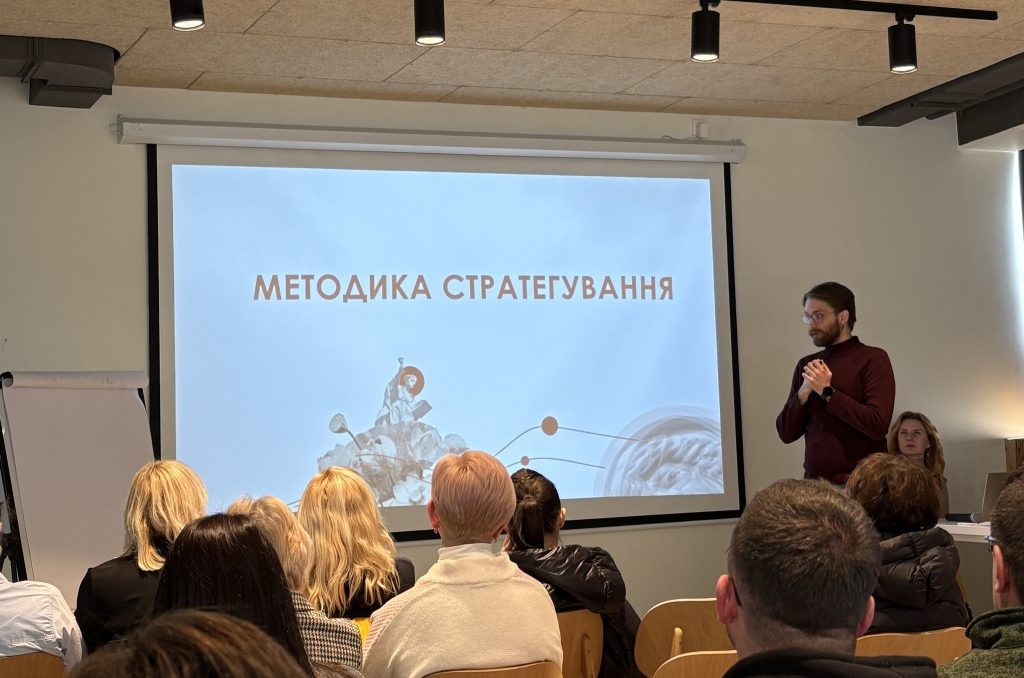
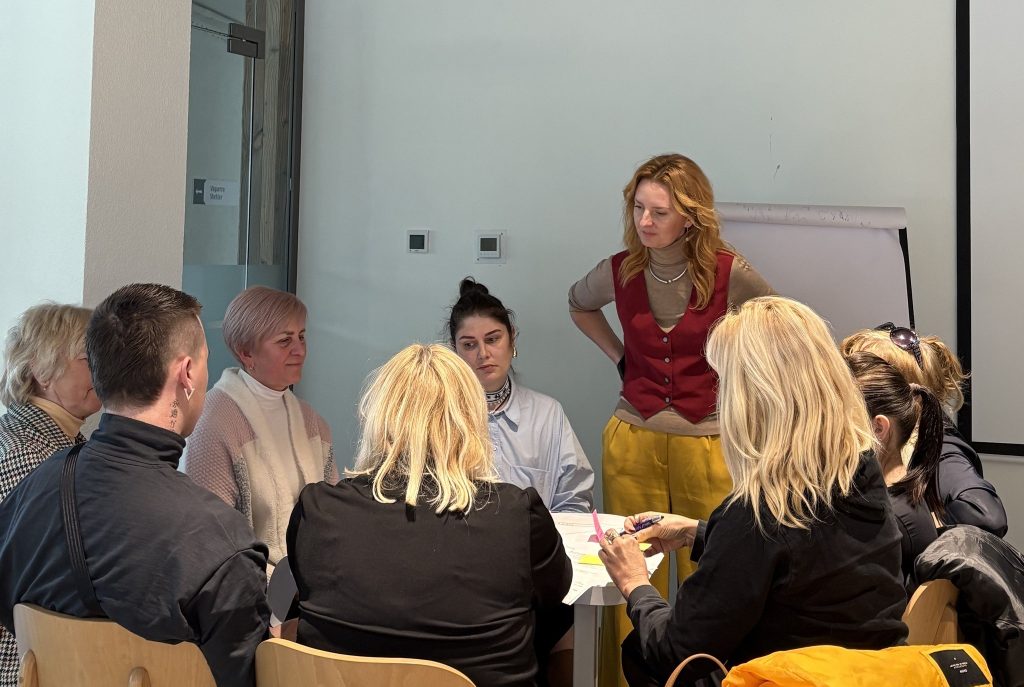
Photos provided by the Culture Department of Lviv City Council.
Training session “Strategy as a starting point: practices and methods of strategizing for cultural institutions”, as part of training for managers of cultural institutions in the Lviv community (November 19 / Lviv). The training was performed by CSI analysts Solomiya Tkach and Vasyl Tkachuk.
The Team
All of the above was implemented and completed throughout 2025 by the CSI team: Yuliia Khomchyn, Lida Savchenko-Duda, Yaryna Melnyk, Vasyl Tkachuk, Solomiia Tkach, Anastasiia Nechyporenko, Iryna Shutka, Anastasiia Demianiuk, Lavrin Shymin, Yaryna Korotkevych, Nazar Bakovych, Orest Kravchyk, Oksana Babenko, Roman Lytvyn, and Olga Struzhynska.
CSI Supervisory Board: Robert Piaskowski, Robert Palmer, Oksana Forostyna, Krzysztof Maj, Iryna Podolyak, Vira Baldyniuk, Leila Melesova-Valchak, Oleksandr Kobzarev.
Partnerships
- Institutional partnership
Ministry of Culture of Ukraine
Ministry of Foreign Affairs of Ukraine
Ukrainian Cultural Foundation
Ukrainian Institute
Mission of Ukraine to the European Union
Lviv Regional Military Administration
Department of Culture, Nationalities, and Religions of Lviv Regional Military Administration
Lviv City Council
Department of Education and Culture of Lviv City Council
Lviv City Council Department of Culture
City Institute
City Museum
Virmenska 35
Institute of Contemporary Art
International Renaissance Foundation
3MIN Foundation
Commit by MitOst gGmbH (Vidnova Placement / Vidnova Program)
Literature Museum
Coalition of Cultural Activists
Radio Khartia
Lviv Polytechnic National University
Lviv National Academy of Arts
- Project/event partnerships / joint processes
Ministry of Culture of the Czech Republic
South Moravian Region
City of Brno
Consulate General of the Czech Republic in Lviv
Czech Center in Kyiv
Partnership Foundation (Czech Republic)
Větrné mlýny Publishing House (Czech Republic)
Faculty of Fine Arts, Brno University of Technology
Ukrajinská iniciativa jižní Moravy /Ukrainian Initiative of South Moravia
Koridor UA
TIC Brno
Finnish Cultural Foundation
Finnish Arts Promotion Centre
MONO
America House Lviv
Gorgan Creative Group
FAMA Agency
CEDOS Analytical Center
Department of Cultural Studies, UCU
Department of Contemporary Art Practices, LNAA
Dzyga Art Center
Istoriya Space
Ukrposhta
Tempo Music Development Center
Myroslav Skoryk Lviv National Philharmonic
Lviv Organ Hall / Homin Center
Mykola Lysenko Lviv National Music Academy
Zenyk Art Gallery
Klymentiy Sheptytsky Museum of Folk Architecture and Everyday Life in Lviv
Student Self-Government of the Ukrainian Catholic University
- Joint initiatives
Lviv Regional Blood Service Center and its Board of Trustees
City Blood Center (First Medical Union of Lviv)
Franko House
Lviv Historical Museum
Andrey Sheptytsky National Museum in Lviv
State Museum of Natural History
Lviv Museum of the History of Religion
Mykhailo Hrushevsky State Memorial Museum in Lviv
Solomiya Krushelnytska Music and Memorial Museum in Lviv
Stanislav Lyudkevych Memorial Museum
Lviv Palace of Arts
Borys Voznytskyi Lviv National Art Gallery
Patyk Museum
Lviv Photo Museum
D.S. Secret Pharmacy Interactive Museum
Territory of Terror
Shum Art Gallery
Ya Gallery and Ya Gallery Penthouse
Jam Factory Art Center
Mercury Art Center
Solomiya Krushelnytska National Opera and Ballet Theatre
Maria Zankovetska National Theater
Les Kurbas Theater
Lesya Ukrainka Theater
Pershyi Theater
Lviv Puppet Theater
“People and Puppets” Theatre
Voskresinnia Lviv Academic Theater
“Word and Voice” Theater Center
Nyzhnyj Zal at the Puppet Theater
Hnat Khotkevych Palace
Dovzhenko Center in Lviv
“Horikhovyi” Lviv Film Center
History and Local Lore Museum in Vynnyky
Boykivshchyna Historical and Ethnographic Museum in Sambir
Tustan Reserve in Urych
Nahuyevychi Reserve in Nahuyevychi
Drohobych Salt Works
Drohobychchyna Museum
Yuri Drohobych Music and Drama Theater in Drohobych
Stryi Bus Station
- Information and media partners
Suspilne (Suspilne Kultura, Ukrainian Radio)
LB.ua
Ukrainska Pravda
Tvoe Misto
Zaxid.Net
Dyvys.Info
Radio Lux
Radio Maximum
Radio Nostalgie
Lviv Post
Pershyi Zakhidnyi
Radio Pershe
- Technical Partners
Format-Zakhid
City Center for Information Technologies
Teracast Production
Media Lviv
Young & Hungry production
- People involved in various projects and processes
Olha Kotska
Yevheniia Nesterovych
Viktoriia Shvydko
Lucia Rzegorzíková
Oksana Dashchakivska
Anna Gerych
Halyna Shevchuk
Volodymyr Shevchyk
Ivan Karbovnyk
Oksana Vaskiv
Sofiia Mindzhala
Uliana Prokopovych
Mariana Prokopovych
Gala Kozutynska
Mykhailo Tsimerman
Olha Vovkohon
Oleksandra Shutova
Olha Kvasnytsia
Yuriy Tabaka
Iryna Sereda
Vitaliy Hrabar
Roman Baluk
Maria Masiuk
Andriy Artym
Polina Pavlova
Oleh Panov
Budget and finances
CSI budget was UAH 6.7 million.
Funds raised — over UAH 4 million.
Our grantors and sponsors:
- International Renaissance Foundation
- 3MIN Foundation
- Robert Bosch Stiftung
- Consulate General of the Republic of Poland in Lviv
- Polish Institute in Kyiv
- Kredobank
- Ministry of Culture of the Czech Republic
- Faculty of Fine Arts, Brno University of Technology
- Finnish Cultural Foundation
Speaking about the city as a whole, Lviv City Council approved the community budget for 2026 on December 18, 2025. The budget envisages culture, alongside with education and sports, as one of five priorities for the development of Lviv. Our review “Money for Culture” discusses how funds for culture are allocated in the 2026 Budget.